
How Ancient Humans Faced Earth’s Deadliest Winters
The idea of ice age survival sounds like a dramatic movie thing, but modern research shows that the real story was way more intense than any fiction. Ancient humans didn’t just endure cold weather. They were living in a environment that constantly tested their bodies, minds and even their social bonds, over and over again. New archaeological and genetic research is basically rewriting what we think we know about prehistoric life, showing a world where making it through had less depended on brute strength and more on adaptability, cooperation, and innovation.
Roughly 20,000 years ago, during the Last Glacial Maximum, enormous ice sheets covered huge chunks of North America, northern Europe, and parts of Asia. In some areas temperatures dropped to really alarming levels, and ecosystems shifted fast. Food turned unpredictable, travel paths changed, and yes, scary predators were out there sharing the frozen ground with humans. Still somehow, our ancestors managed to stay alive.
And what’s starting to come into focus from recent scientific work is, these people weren’t helpless cave dwellers struggling blindly through the cold. They were surprisingly capable survivors, able to adjust, coordinate and solve problems rather than simply endure.
Ice Age Survival and the Fight for Food
One of the hardest realities of prehistoric winter was hunger, plain and brutal. In freezing conditions, the human body burns a lot more energy just to keep itself warm. So, ancient people basically needed calorie rich food just to stay alive.
Archaeologists looking at Paleolithic sites have turned up pretty solid signs that prehistoric humans put a huge emphasis on animal fat. That kinda fits the biology, even if it sounds obvious. Lean meat by itself cannot carry enough steady energy through extreme cold. Bone marrow, fat from organs, and animal grease gave offered the concentrated high yield calories people actually needed for survival.
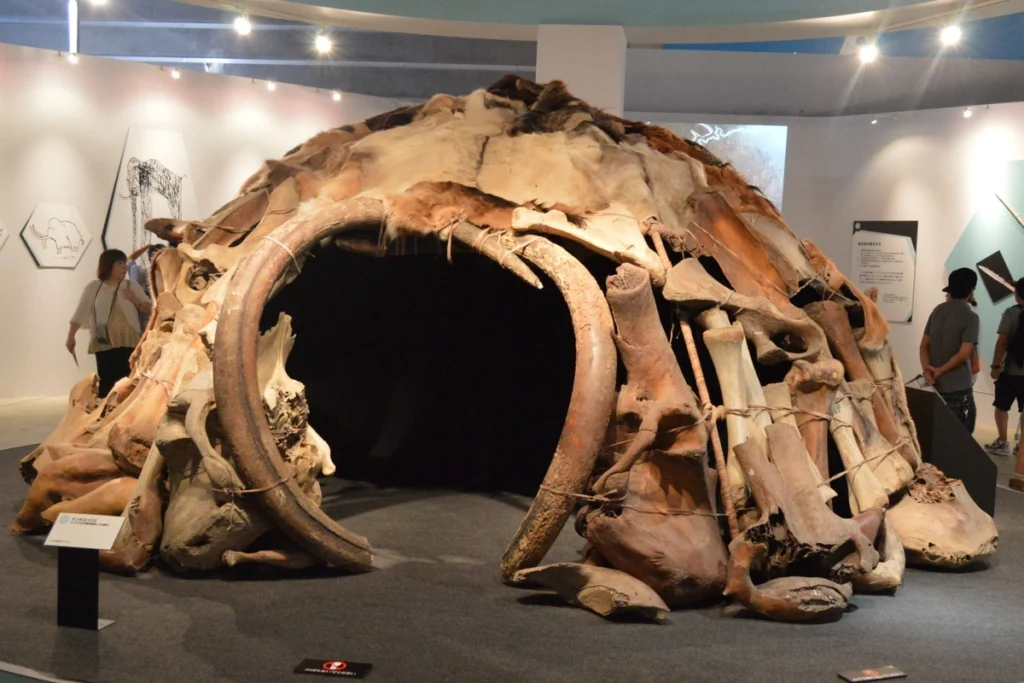
Excavations across Europe also show bones being cracked open on purpose for marrow. Mammoths, reindeer, bison, and other large animals weren’t pursued only for meat. The whole idea was more like “use every workable piece,” because that mattered when temperatures dropped.
There’s also evidence that some prehistoric communities practiced cannibalism. The problem is, the reasons are still argued over, and nobody agrees completely. Researchers have found human bones with cut marks, fractures, and processing signs that look similar to animal remains. Still, that doesn’t automatically mean to violent killing purely for food. In some cases, experts suggest ritual handling of the dead, or else survival driven consumption during famine.
That uncomfortable reality reminds us how brutally unforgiving ancient winters could be.
Also Check | What Our Ancestors Really Ate Will Surprise You
The Clothing That Saved Humanity
One outdated myth still lingers in popular culture. Many people imagine prehistoric humans wrapped in rough hides with little sophistication.
The evidence says otherwise.
Archaeologists have uncovered bone needles dating back tens of thousands of years, suggesting fitted clothing rather than simple draped skins. This matters because loose coverings do little against sustained freezing temperatures.
Tailored garments trap body heat far more efficiently. Layered animal furs likely worked much like modern insulated winter wear.
Foot protection may have been equally critical. Cold injuries to feet can quickly become life threatening. Some researchers believe ancient humans created primitive boots using animal hides, grass stuffing, and insulating materials.
Grease may also have served practical purposes, helping protect exposed skin from dryness and wind damage.
Far from primitive improvisation, this was survival engineering.
Ice Age Survival and the Predator Problem
Winter was not the only trouble.
In the prehistoric world there were predators that could freak out even seasoned, modern survivalists. Cave lions, big old hyenas, saber toothed cats from earlier times, and packs of wolves all seemed to compete for territory and food.
Humans weren’t automatically top of the food chain.
And this is where fire shifted the whole story.
Fire gave warmth, some real protection, cooking options and this almost psychological calm. Once people lost fire access during freezing weather it could turn deadly in just hours, or a few days if you were lucky.
Anthropologists think certain groups used to safeguard embers while they moved, instead of gambling on total fire loss. It might sound like dramatic, but in brutal climates it actually works.
Basically, dependable flames meant cooked food, safer sleeping, a deterrent effect against predators, and survival.
Without it, everything became harder.
What Recent Science Says About Neanderthals
Modern research kind of reworks how scientists see Neanderthals.
For a long time they got painted as less intelligent, or socially inferior. But that picture doesn’t really stand anymore, not when you look at the evidence closely.
There are signs that Neanderthals cared for injured individuals who survived serious trauma, suggesting compassion and group support. On top of that, genetic research has shown structured social communities, even if those circles might have been smaller, or perhaps less resilient in the long run, compared with Homo sapiens.
Meanwhile, new modeling research also suggests social connectivity could have mattered a lot, in a way that explains why modern humans lasted while Neanderthals vanished. In unstable environments, groups with wider communication, and stronger exchange networks may have been better equipped to adapt, kind of like staying flexible when things broke apart.
This shifts the conversation away from simplistic intelligence comparisons.
The real difference may have been flexibility and connection.
Also Check | Why Your Brain Can’t Remember Baby Memories
Ice Age Survival Changed Human Evolution
Ancient winters did more than just threaten lives. They probably influenced evolution itself.
When modern humans met Neanderthals, interbreeding happened. Genetic studies show that bits of Neanderthal DNA are still in many living humans, and they may affect parts of immunity, metabolism, and everyday adaptation.
So in a way, the whole survival story from the Ice Age is still here, embedded in modern biology, even if we don’t notice it.
Researchers are also looking at how old survival strategies might connect to sleep patterns, and circadian rhythms. The environmental pressures like long dark winters, could have changed how human bodies handle light exposure, rest timing and seasonal stress.
Evolution is not only about physical appearance.
It is also about behavior, resilience, and adaptation.
The Psychological Battle of Endless Winter
Survival was not only physical.
Imagine weeks of darkness, relentless wind, uncertainty about food, and the constant fear of predators.
That kind of stress changes people.
Researchers studying human behavior increasingly recognize the importance of social bonding in prehistoric resilience. Shared knowledge, trust, and emotional support likely made survival more realistic.
Storytelling may have played a surprisingly practical role.
A story could preserve knowledge about migration routes, dangerous terrain, hunting methods, or seasonal behavior of animals. Oral tradition was not mere entertainment.
It was information storage.
In a world without writing, stories were survival tools.
Even modern human emotional responses may reflect these ancient pressures. Many people instinctively find fire calming. Darkness increases alertness. Isolation raises anxiety.
These reactions may be echoes from a much older world.
Were Ancient Humans More Resilient Than Us
It is tempting to assume modern people would easily outperform prehistoric humans because of better knowledge.
But remove heating, packaged food, medicine, and technology, and the equation changes quickly.
Ancient humans understood their environment in deeply practical ways. They read weather patterns, tracked animals, made clothing, maintained fire, and relied on community survival.
Modern convenience has reduced the need for those skills.
That does not make ancient humans tougher in some mythical sense. It means they were adapted to a radically different reality.
And that may be the most fascinating part of this story.
Also Check | Deadliest Secret Weapons Used During Vietnam War To Terrify Enemies
Final Thoughts
The real story of ice age survival is not about savage desperation or simplistic cave man stereotypes.
It is about human ingenuity under relentless pressure.
Yes, prehistoric winters were deadly. Hunger was real. Violence happened. Entire groups likely vanished without leaving a trace.
But the bigger story is adaptation.
Back then, ancient humans created tools, social systems, clothing, food strategies, and emotional toughness that helped them make it through one of Earth’s hardest environments.
That frozen struggle may have shaped who we are today more than we realize.
The next time you complain about a cold morning, remember this.
Your ancestors survived a world where winter was not an inconvenience.
It was a test of whether humanity deserved to continue.