
The city that should never have survived
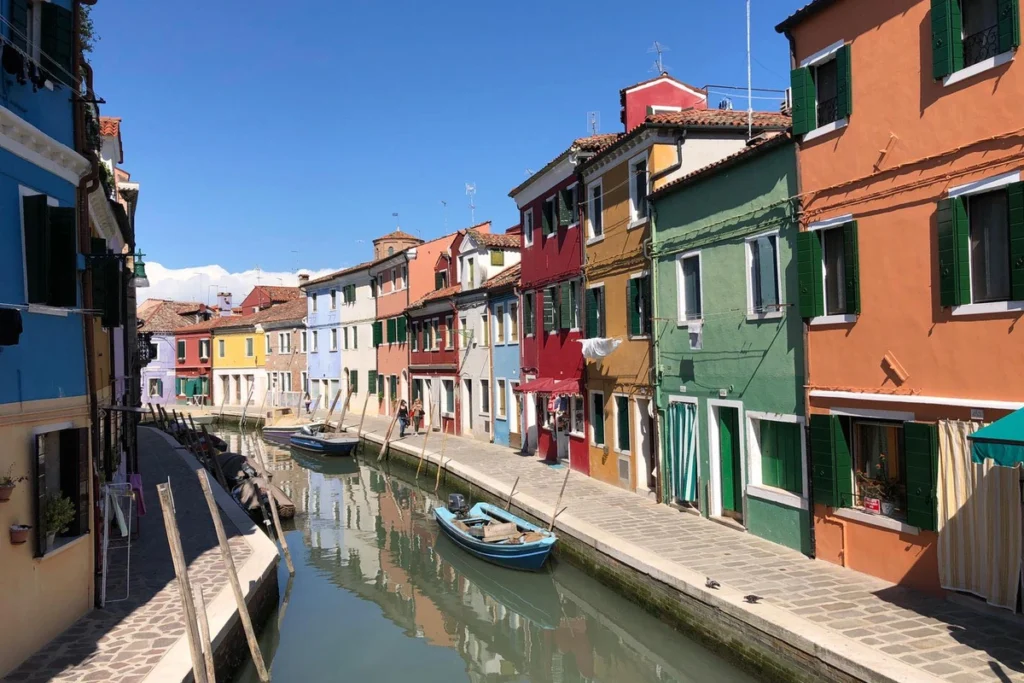
How Venice was created is one of history’s most astonishing survival stories. Most great cities were built on strong land, near rivers, trade routes, or fertile plains. Venice had none of that. It rose from wet mud, shallow tidal waters, and scattered islands that looked more suitable for birds than people.
Its beginning was not glamorous. It was desperate.
In the fifth century, while the Western Roman world was slowly cracking under repeated invasions, frightened communities drifted toward the Venetian lagoon for safety. Historical records and UNESCO heritage documents support the idea that these early settlers escaped successive waves of instability and ended up sheltered on lagoon islands, that were difficult for invaders to reach.
What began as a sort of temporary cover gradually turned into one of the richest and most influential cities the world had ever seen.
A city built on mud, wood, and pure determination
The first settlers faced a brutal reality. The lagoon islands were unstable and marshy. The ground could barely support human weight, let alone stone homes, churches, and marketplaces.
The solution was remarkably clever.
Builders drove thousands, and eventually millions, of timber piles deep into the muddy ground until they reached harder compact layers beneath. These underwater wooden supports became the hidden skeleton of Venice.
It sounds strange that wood could survive underwater for centuries, but the science makes sense. In oxygen poor conditions, the organisms that normally rot timber cannot thrive the same way. This helped preserve many submerged wooden foundations for generations, though modern conservation studies note that some biological degradation can still occur over very long periods.
A platform of timber and stone was then placed above these piles, creating stable building surfaces in an environment that seemed impossible to engineer.
Venice was not floating. It was carefully anchored.
Also Check | This Baboon Fought in World War I and His Story Sounds Too Wild to Be True
Why Venetian buildings look elegant but were secretly practical
Venice is famous for beauty, but its architecture was also built around survival.
Early structures often used wood, but repeated fires pushed the city toward brick construction. Venetian builders understood that heavy structures could become dangerous in soft ground conditions, so buildings had to be intelligently balanced.
Flexible lime mortar became essential because it allowed slight movement instead of cracking under stress. Internal support systems distributed pressure while heavier decorative facades were structurally reinforced.
This is part of what makes Venice so fascinating. Beneath every romantic canal side palace is practical engineering born from necessity.
The city’s beauty was never accidental.
How Venice turned water into its biggest business advantage
Most medieval cities relied on roads. Venice took a completely different route.
Its waterways became transportation highways.
As settlements expanded across the lagoon, separate islands gradually connected through development and later bridges. Instead of carts crowding muddy streets, goods moved efficiently by boat.
That transformed Venice into a logistics machine.
Merchants could transport cargo directly into the heart of commercial districts. This reduced friction in trade and helped Venice become a maritime powerhouse by the medieval period, with influence stretching across Europe and into eastern trade networks.
Water, which should have been a weakness, became Venice’s greatest competitive edge.
The engineering story behind the famous bridges
Venice’s bridges feel timeless today, but they arrived gradually as the city evolved.
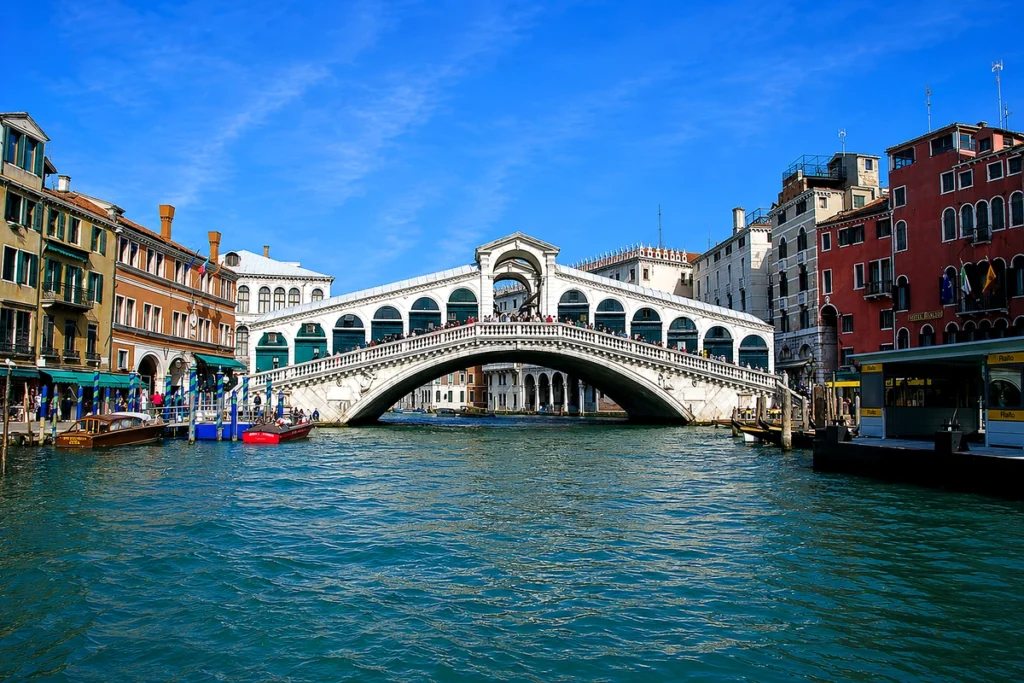
One of the most iconic examples is the Rialto Bridge, which became a critical commercial crossing in the city center. Earlier bridge versions existed before the famous stone structure replaced them.
Its construction required advanced engineering for the time, including dense pile foundations to support massive stone loads over active waterways.
This was not decorative urban design.
It was infrastructure supporting one of Europe’s busiest economic centers.
Once bridges multiplied, Venice became even more interconnected. Pedestrian life and boat traffic operated in parallel rather than in conflict.
That gave the city an unusual urban efficiency many medieval capitals lacked.
Also Check | What Ancient Humans Really Ate Is More Strange Than You Imagine
The fresh water problem nobody talks about
Venice was surrounded by water, but almost none of it was drinkable.
Saltwater from the lagoon could not sustain a growing population. Importing water from the mainland worked for a time, but population growth created serious pressure.
Venetian engineers answered with another remarkable system.
Public squares were designed to function as rainwater collection networks. Beneath them, carefully engineered cistern systems filtered rain through layers of sand and stone before storing usable water.
Nearby rooftops were integrated into this collection strategy through drainage systems.
It was urban water harvesting centuries before the concept became fashionable.
These systems helped sustain dense populations in a city with no natural freshwater supply.
Venice’s sanitation system was surprisingly advanced
Medieval sanitation in many cities was awful.
Venice found an unusual partial advantage through tidal movement.
Waste management evolved over time, with drainage systems designed to move wastewater through canals influenced by the natural rise and fall of lagoon tides. Saltwater movement helped flush parts of the system, though by modern health standards the sanitation approach was far from perfect.
Still, compared with many crowded medieval urban centers, Venice developed unusually adaptive environmental infrastructure.
The city constantly engineered around its limitations.
Latest research shows Venice’s greatest threat is no longer invasion
Today, Venice faces a different kind of danger.
Climate pressure, rising sea levels, ecosystem stress, and issues around preservation are now sort of central things. Modern flood defense systems like MOSE have reduced the immediate flood risks, though experts still debate long term sustainability because protecting the city can also disturb, the lagoon’s more natural environmental balance
Venice, somehow made it through invaders, engineering hurdles, and centuries of city strain.
Its biggest battle now is with changing environmental conditions.
Also Check | Unbelievable Things That Exist Only in Japan and Nowhere Else
Why Venice still feels like a miracle
Venice should not exist.
That is what makes it unforgettable.
A frightened refugee settlement in a hostile lagoon became a symbol of wealth, design, resilience, and human creativity. Its canals are beautiful, but the real wonder lies below the waterline, where hidden forests of timber still support stone buildings that have stood for centuries.
A frightened refugee settlement in a tricky lagoon became this kind of emblem for wealth, design, resilience, and human creativity. Its canals look stunning, but the main wonder is under the waterline, where quiet groves of timber still support stone buildings, those same ones, that have lasted for centuries.
How Venice was created is not just a story about architecture.
It is a story about human stubbornness.
When the world offered mud, tides, and uncertainty, the Venetians built a civilization anyway.
And somehow, it worked.