
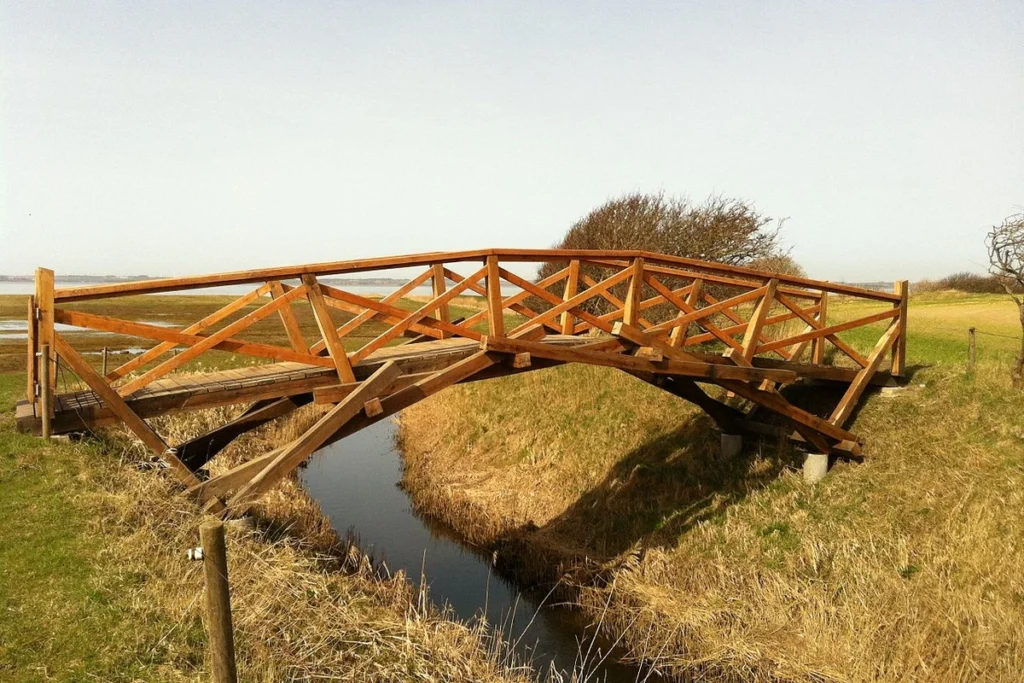
Da Vinci bridge design captures attention again with stunning experiment
Leonardo da Vinci’s self-supporting bridge design is becoming a part of engineering discussions. A recent demonstration of this centuries-old concept surprised many people. Because in just minutes, you could turn normal things like wooden logs into a very strong structure. No bolts, nails or glue. Just physics, and some clever thinking.
How Da Vinci bridge design works without joints
Da Vinci bridge design begins with a few wooden beams placed in a loose arrangement. At first, nothing seems stable. The pieces don’t even lock together. But the moment additional logs are inserted in a specific pattern, everything changes.
The structure starts to interlock naturally. Each piece presses against another, creating a chain of support. What makes it fascinating is that the bridge does not rely on fixed connections. Instead, it depends entirely on balance and friction.
When pressure is applied to the center, something unexpected happens. Instead of collapsing, the bridge tightens. The force travels through the structure, pushing the logs together more firmly. This is called ‘friction lock’ in engineering. More weight means a stronger grip.
It feels illogical at first. Most structures weaken under stress. This one does the opposite.
Also Check | Why America Dumped Thousands of Train Cars Into the Ocean
Da Vinci bridge design shows perfect balance of forces
There is a certain elegance in how every piece plays an equal role. No part is overbuilt. No section carries all the weight alone. If even one log is removed, the entire bridge collapses instantly.
That moment of collapse feels dramatic and revealing. It shows that the bridge’s strength isn’t just in one part but in its unity. Each part relies on the others, like a tightly coordinated system.
But, what happens when you extend the pattern further. If you keep adding more segments, the structure eventually becomes a full circle. This circular form is self supporting as well, and surprisingly strong. You can put pressure on it, stand on it, even move it around, and it still holds together.
But remove just one piece and the entire circle breaks apart in seconds.
Soldiers once used Da Vinci bridge design for quick deployment
Historical interpretations suggest that Da Vinci bridge design was intended for military use. The idea was simple. Armies needed a way to cross rivers quickly without carrying heavy equipment.
Soldiers could assemble the bridge using available wood and temporary supports. Once the structure was complete, the supports would be removed, leaving behind a fully functional bridge.
To move the bridge into position, ropes were sometimes used to hold the structure together during lifting. After placing it across a river, the ropes could be removed, and the bridge would still remain stable.
There was also a clever tactical advantage. If enemies approached, soldiers could destroy the bridge instantly by removing just one key piece. That kind of quick assembly and disassembly made it extremely useful in fast changing situations.
Also Check | Inventions That Happened by Mistake and Changed the World
Why Da Vinci bridge design is not widely used today
Despite its exceptional design excellence, the Da Vinci bridge design is rarely seen in modern construction projects. The main limitation of the system exists, because it requires a specific distance to function properly. The system requires a circular shape to continue its expansion beyond existing limits.
The bridge requires larger wooden beams for its construction, because it needs to extend further. The situation creates another problem. The increasing height of the bridge makes climbing it more difficult while decreasing its suitability for daily activities.
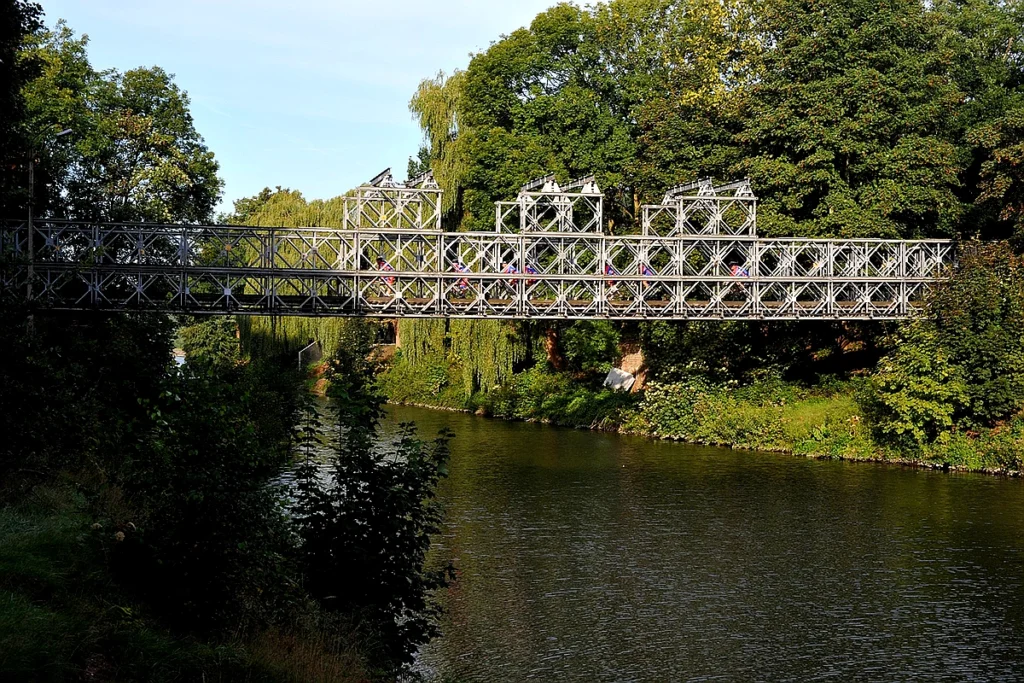
Modern engineering has developed new methods, that provide better adaptability for various needs. The Bailey bridge which Donald Bailey created during World War II serves as one of the most popular temporary bridge solutions used in present times. The system features modular steel parts which workers can rapidly assemble to create bridges of various lengths.
The Da Vinci bridge design presents fewer options than the more flexible solution. The concept produces outstanding results through its design yet it proves difficult to implement beyond its initial framework.
Da Vinci bridge design still inspires modern thinkers
The self supportive bridge concept is motivativating modern engineers, designers and educators, because of its inherent flaws. Making a structure that maintains its integrity using natural forces needs intense force and balance.
In classrooms and workshops students use this bridge as their preferred experimental project. This teaches about engineering skills together with their ability to solve problems and develop creative solutions. You start with a pile of simple wooden pieces and end up with something strong enough to stand on.
The experience remains with you throughout your life.
Some modern innovators create new methods to transform existing technologies through material innovation and hybrid design development. The goal is to maintain its original and simplicity, while developing improved practical functions. People continue to explore bridge designs which have not yet reached common acceptance as functional replacements for contemporary bridge structures.
Also Check | Why You Can’t Remember Your Baby Memories
A timeless idea that still feels ahead of its time
The Da Vinci bridge design shows that great ideas don’t need those complicated technological systems to achieve what they are aiming for. The most effective solutions emerge when people focus on studying natural force interactions and apply their findings through direct, practical methods.
The bridge demonstrates its ability to support heavier loads as the applied pressure increases. The phenomenon occurs through physics, which operates according to its established rules that scientists have known since ancient times.
The wooden structure demonstrates its original design brilliance when it exists in a technological world that relies on sophisticated machines and electronic systems. The structure does not serve as a primary component of contemporary infrastructure. This structure continues to inspire creative thinking while people show deep admiration for it.
And honestly, that might be its greatest strength.

A passionate blogger, content writer, and digital explorer, specialize in writing engaging, and value-driven articles across diverse niches.