
How accidental inventions quietly transformed modern life
Accidental inventions have this strange way that remind us not every great idea starts with a perfect plan. Sometimes a failed experiment, a messy laboratory, or even an annoyed chef can end up changing daily life for millions of people.
History is full of stories where inventors were hunting for one thing, and then they bumped into something far bigger than they expected. Some wanted to find safer chemicals. Others were trying to crack medical problems. A few were just experimenting around, without knowing the outcome. Still, those unforeseen finds ended up shaping the modern world in ways that not many could have predicted.
Even now, researchers keep looking at serendipity in innovation, because accidental breakthroughs are still a genuine slice of scientific progress. The belief that mistakes can turn into opportunity is not only some “push yourself” line. It is basically written in the history of science, food, medicine, and technology.
Accidental inventions in the kitchen that changed how we eat
Take the microwave oven, for example.
In 1945, when engineer Percy Spencer was working with radar technology he noticed something strange. A chocolate bar in his pocket got melted while he was standing near microwave-producing equipment. He was curious more than annoyed, so he tried popcorn kernels, and later on, some other foods too. That little unplanned moment invented microwave oven, which is now one of the most common kitchen appliances around the world. Britannica even says Spencer’s breakthrough grew out of radar work, not from plain food experimentation.
Now, there’s also a tasty accident that created potato chips.
Back in the 1850s, chef George Crum was reportedly dealing with a customer who was unhappy about thick fried potatoes. Instead of making gentler and softer fries, he cut the potatoes paper thin, fried them until they were crisp, and then used heavy seasoning on top. What began as irritation sort of turned into one of the world’s most loved snacks.
Then there is the ice cream cone.
At the 1904 St. Louis World’s Fair, a vendor selling ice cream supposedly got stuck when he ran out of dishes during a busy rush. A nearby waffle seller came up with a quick fix, by rolling waffles into cone like shapes. The combination became an instant hit. Whether every piece of that story is preserved perfectly in the record or not, the ice cream cone still ended up as a world wide sign of summer happiness.
Coca-Cola also entered the world through experimentation.
Pharmacist John Pemberton originally developed his syrup as a medicinal tonic. The sparkling drink version reportedly emerged when soda water was used instead of plain water. That small switch created one of the most recognized beverages ever made.
Also Check | How One Tiny Bird Helped Fix Japan’s Biggest Bullet Train Problem
Accidental inventions that revolutionized science and medicine
Some accidental discoveries did far more than improve convenience. They saved lives.
Alexander Fleming’s discovery of penicillin is still one of the most remembered “scientific accidents” in history. In 1928, Fleming noticed mold contaminating a bacterial culture plate in his lab, and honestly it was one of those moments where you almost miss it. What really snagged his attention was a clear zone, where bacteria just didn’t grow near the mold. That little surprise turned into penicillin, that started the antibiotic era and changed medicine forever. Britannica even points out that this accidental contamination became the foundation of modern antibiotic treatment.
Then, there’s another medical leap came from antidepressants.
The first antidepressant medications came about as researchers tried compounds meant for tuberculosis. The approach, well it didn’t work all that well against the disease, but doctors observed that patients seemed happier, and more energetic, almost like their mood changed dramatically. That unexpected benefit redirected psychiatric medicine.
Even the implantable pacemaker has a similar “whoops” origin.
Engineer Wilson Greatbatch was working on a heartbeat recording device when he accidentally used the wrong resistor. Instead of just capturing rhythms, the circuit started to send electrical pulse that matched the human heartbeat more closely. It was an error that somehow turned into a life-saving invention, and still supporting patients worldwide today.
X-rays, too, follow a comparable pattern.
In 1895, physicist Wilhelm Röntgen discovered a strange kind of rays while experimenting with cathode tubes. He understood these rays could pass through soft tissue, while still revealing bones and other dense materials. From that curiosity and odd observation, modern diagnostic imaging was born.
Accidental inventions that changed everyday materials
Some accidental inventions became so normal that we rarely think about their unusual origins.
Teflon is one of them.
Chemist Roy Plunkett was working at DuPont while researching refrigerants, and he found this strange wax like material inside a gas cylinder. Instead of the normal chemical reaction which he was expecting, he noticed a substance with really remarkable nonstick qualities, plus it was heat resistant too. Somehow that unintended discovery turned into Teflon, which later became widely used for cookware, aerospace, and a bunch of industrial uses.
Plastic also emerged through experimentation.
Belgian chemist Leo Baekeland was basically trying to find a synthetic substitute for expensive natural stuff like shellac. But instead of that, he ended up creating Bakelite, one of the earliest synthetic plastics. That invention opened the door to the plastic age… and reshaped manufacturing, electronics, and consumer products.
Then there was Superglue, which also came out of some kind of mistake.
Harry Coover, he was working on materials for military optical equipment, and somehow he produced a substance that stuck to just about everything. First it was annoying and not really useful. But later its sticky strength became the biggest advantage of all, and that changed the whole story.
After that, Post-it Notes followed a similar route.
A 3M scientist tried to invent a super-strong adhesive, but accidentally made a weaker one instead. Only years later, a colleague noticed the adhesive was actually ideal for those reusable paper notes. You know, the ones that can attach and peel away cleanly, without damage or fuss. Since then, offices and homes have not really looked the same, ever again.
Also Check | How Da Vinci Designed a Bridge That Holds Itself Together Without Nails or Ropes
Accidental inventions born from chemistry surprises
Chemistry has a long tradition of rewarding curiosity.
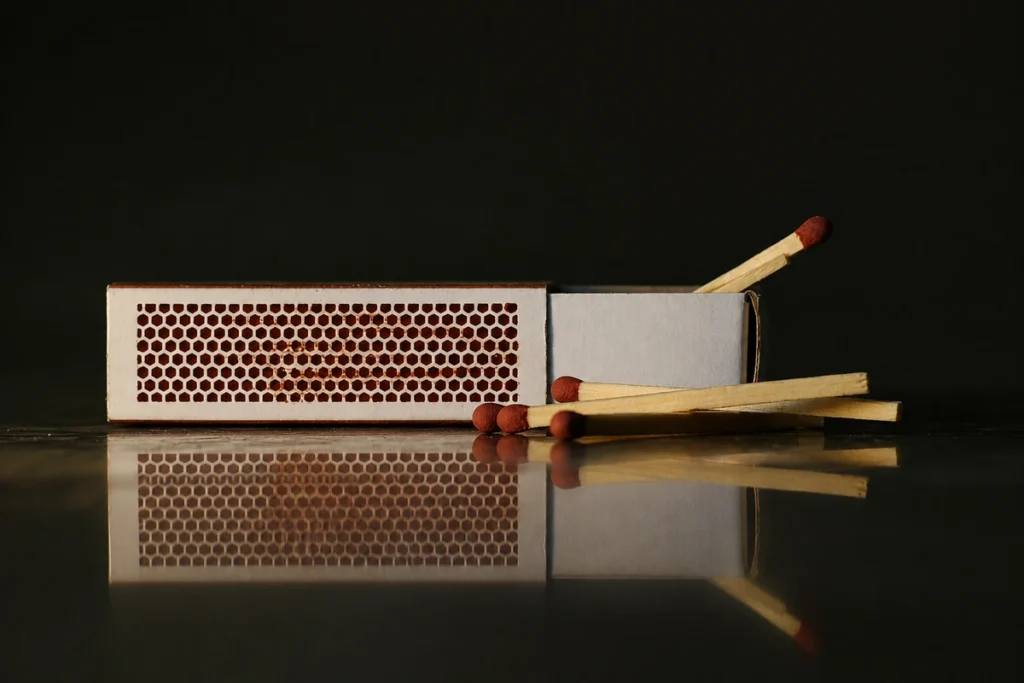
Matches were reportedly born when English chemist John Walker noticed friction igniting chemicals on a wooden stick. Instead of dismissing it, he refined the concept into one of the earliest friction matches.
Safety glass came from a dropped lab container.
French chemist Edouard Benedictus accidentally knocked a glass flask off a shelf and it did not fully shatter like you’d expect. It cracked, but it stayed together because there was a leftover plastic coating inside. From that observation he basically got the idea for laminated safety glass, which is now everywhere in cars and buildings.
Rubber improved through a surprising accident too.
Charles Goodyear spent years experimenting with rubber formulations, mostly because raw rubber just didn’t hold up so well in the heat and the cold. One day, a sulfur treated mixture just ended up on a hot surface by accident. After that, the rubber turned into vulcanized rubber, stronger and honestly way more durable than it used to be.
That discovery ended up helping a lot of modern things like tires, industrial seals, sporting goods, and countless everyday products.
Why accidental inventions still matter today
The story behind accidental inventions isn’t just entertaining history.
In today’s research techniques people still rely on straightforward observation, curiosity and a willingness to accept the unexpected outcome without shutting it down too quickly. And honestly, a lot of the most thrilling breakthroughs happen when a researcher sees something strange, then instead of discarding it, they take it seriously and follow that odd thread further.
Innovation is rarely a straight line.
A failed chemical reaction may become a billion-dollar product. A lab contamination may save millions of lives. A kitchen mistake may become comfort food across continents.
That is what makes these stories so fascinating.
They remind us that progress is not always neat, planned, or predictable. Sometimes the most important discoveries begin with confusion, frustration, or pure chance.
And honestly, that makes our creativity even more impressive.
Because behind every so-called accident was someone curious enough to stop, look closer, and ask a simple question.
“What just happened?”