
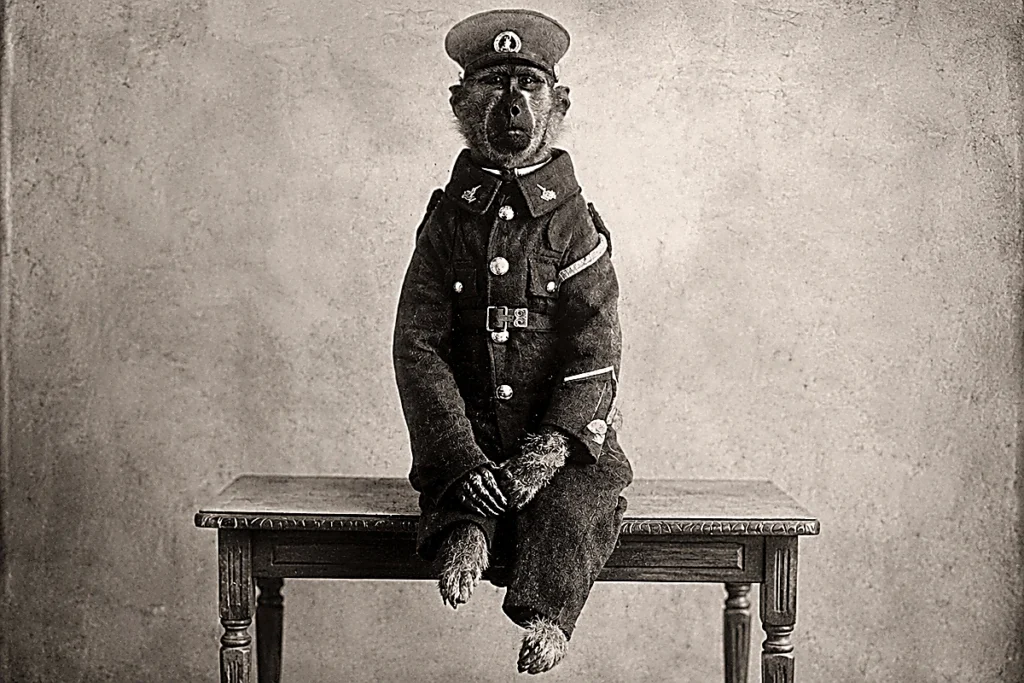
Jackie the Baboon Story that still amazes history lovers
Jackie the Baboon Story feels almost unusual to be true, yet the military history records says that a baboon from South Africa became one of the most unforgettable animal figures during World War I. In a war people mostly remember for mud-filled trenches, devastating encounters, and unimaginable human sacrifice. But Jackie still managed to play a very important role that keeps sparking curiosity even after a century later.
Lately, interest in forgotten wartime stories has brought Jackie back into public talk, especially as readers look for remarkable real life accounts that go beyond the usual battlefield narratives. Sure, animals were often used in wartime for communication, transport and morale, but Jackie’s situation was… different. He wasn’t just a mascot standing off somewhere, like way far from any real danger. He ran into frontline conditions, took injuries, and became woven into military daily life in a way that very few animals have, at least not in the same way.
The story itself starts not on a battlefield at all, but on a South African farm.
A farm animal who became family
Before war sort of entered the picture, Jackie was a chacma baboon who lived in South Africa. He got taken in by Albert Marr, a farmer, who found the young baboon and raised him with a lot of care. Over time Jackie became really attached to Marr, acting less like a wild thing and more like a devoted mate or companion.
People who study animal behavior often say that baboons are pretty intelligent. They’re observant , they’re intensely social, and they can learn routines quickly. So it makes sense Jackie would adapt so well to life around humans.
Then World War I escalated, and South African men were called into service. Marr enlisted too. The problem was what to do with Jackie. Marr reportedly could not imagine leaving him behind, so he made an unusual request to the military authorities.
And, surprisingly enough, permission was granted.
That one choice turned an ordinary farm baboon into one of the strangest military figures of wartime history.
Also Check | What Our Ancestors Really Ate Will Surprise You
Jackie the Baboon Story inside the South African Army
Once accepted into service alongside Albert Marr, Jackie became attached to the 3rd South African Infantry Regiment, often linked with the Transvaal Scottish unit.
Historical accounts describe Jackie receiving treatment much like other soldiers. He had a uniform, military equipment, food rations, and even official paperwork. Soldiers quickly grew fond of him.
But Jackie was more than entertainment in camp.
He learned routines by watching others. He reportedly saluted superior officers, copied drills, and became comfortable around military life. His natural senses also made him unexpectedly useful.
In wartime conditions, hearing movement before others could make a real difference. Soldiers believed Jackie’s sharp hearing and strong sense of smell helped detect unusual activity, especially during guard duty.
This made him far more than a symbolic mascot.
Life near the front lines
World War I was, just … brutal beyond imagination. The conditions in those military camps and trenches were filthy, relentlessly exhausting, and yeah, emotionally crushing too. So if Jackie managed to survive in all that, it kind of says a lot, about how he adapted quickly, and also about that bond he had with the men around him.
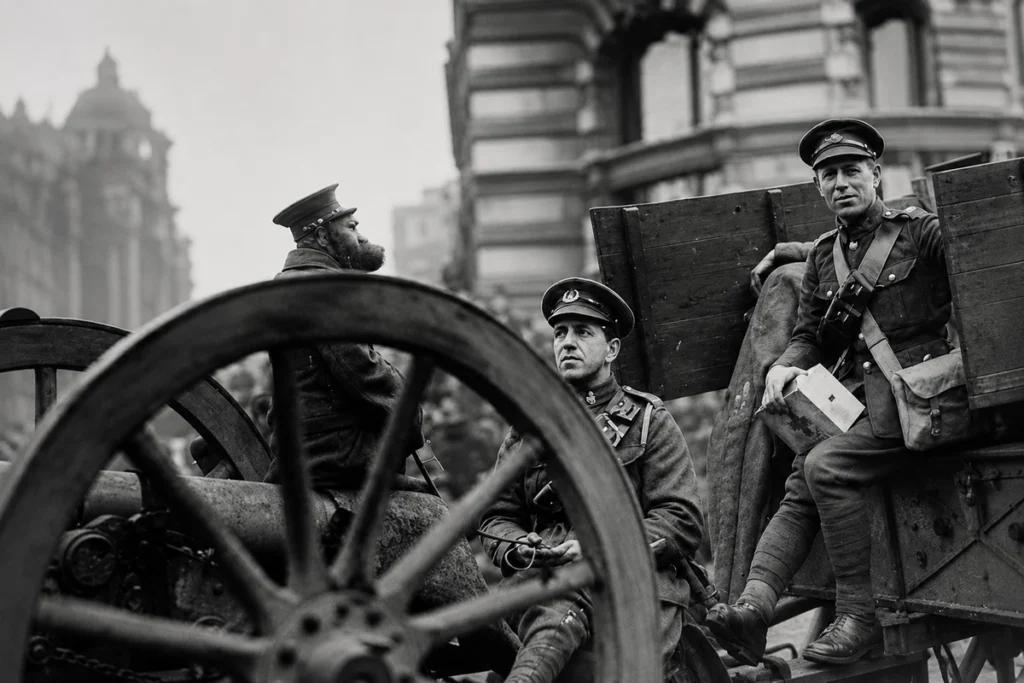
South African troops took part in several campaigns through the war, including operations in North Africa and also in Europe. And the historical records show that Jackie didn’t really hang back in some safer place. Instead he reportedly accompanied the regiment during active service.
There’s one well known account that claims when Albert Marr was wounded during the fighting, Jackie stayed right there close to him, like he refused to step away, even for a moment. Little stories like this helped to shape Jackie’s reputation among fellow soldiers.
Now, some older retellings may have padded out certain battlefield details a bit, or made things more vivid than the evidence supports. Still, most historians seem to agree on the main part. Jackie was genuinely present during wartime service, and he suffered real combat injuries.
That by itself makes his story pretty extraordinary.
Also Check | Da Vinci’s Self Supporting Bridge Design
The injury that changed everything
One of the most dramatic moments in Jackie’s military life came when enemy shellfire struck during battle.
According to long repeated military accounts, Jackie was seen copying soldiers by trying to build a protective barrier around himself using stones while fighting continued nearby. Then shrapnel hit him.
Medical support teams rushed to help Jackie, but he resisted their assistance until Albert Marr arrived. He suffered very serious injuries, and one leg had to be cut off.
For many wartime soldiers, such an injury would have ended both service and hope.
Jackie survived.
That survival became one of the defining moments of his legend.
Military historians keep bringing up this episode, because it shows that strange human angle about Jackie. When things got dangerous, he did what the soldiers nearby were doing. He went for shelter, he stayed through the ache, and he relied on the partner he trusted the most.
Recognition for bravery
Jackie’s recovery made him even more admired among the troops.
He received official recognition after the war and was awarded honours for his military service. He was also promoted to the post of corporal.
That promotion made history.
Today, Jackie is widely remembered as the only baboon from the South African infantry who held that level of rank.
The story resonates because military recognition usually reflects courage, endurance, and contribution to unit morale or operational life. Whether Jackie understood the meaning of medals or rank is beside the point.
The soldiers around him clearly believed he had earned their respect.
Why Jackie still fascinates modern readers
There is something deeply compelling about unusual wartime stories because they remind us history is filled with unexpected human moments.
Jackie’s story is not just about a baboon in uniform. It is about companionship in wartime. It is about loyalty in impossible circumstances. It is about how soldiers under immense stress found connection and comfort in unlikely places.
Modern readers are especially drawn to forgotten stories that feel emotional and surprising. In the age of social media, strange but true historical stories often spread quickly, yet Jackie’s story remains meaningful beyond its novelty.
Animal historians also note that wartime animals played major roles across history, including horses, pigeons, dogs, and even cats. Jackie stands apart because of how integrated he became in military culture.
His story feels bizarre at first glance.
Then it feels strangely moving.
Also Check | Your Brain Is Hiding Your Baby Memories for a Strange Reason
Jackie’s final years
After the war ended, Jackie was discharged and returned to South Africa with Albert Marr. He lived away from the chaos of battle during his remaining years.
His life ended in 1921. But his courage has stretched across generations. History enthusiasts, educators, and history publishers keep being drawn to his extraordinary story.
In a war filled with tragic loss and grim statistics, Jackie offers something different.
A story that feels personal.
A story that surprises even seasoned history readers.
And maybe most of all, a reminder that loyalty can show up from the most unexpected corners of the world.
For a baboon that started his life on a quiet farm, Jackie’s journey into one of history’s most lethal wars remains almost unbelievable..
Yet it happened.
And that is exactly why people still remember him.

A passionate blogger, content writer, and digital explorer, specialize in writing engaging, and value-driven articles across diverse niches.