
Scientists May Have Found the Real Secret Beneath Bermuda
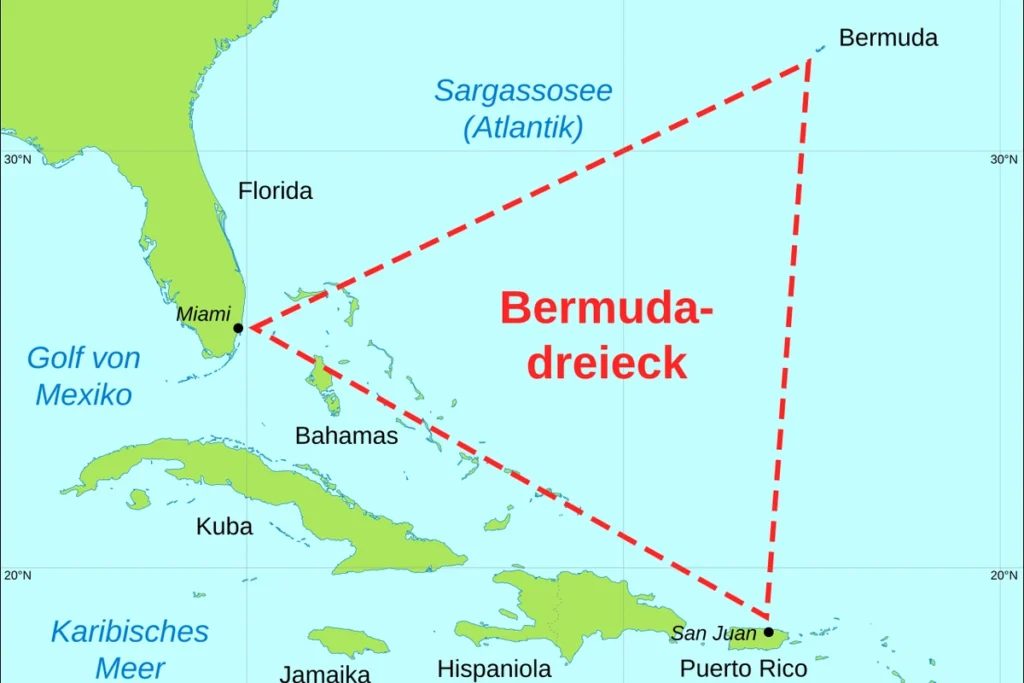
For decades, the Bermuda Triangle Mystery has kinda captured public attention with stories of vanished aircraft, missing ships and odd theories that went from magnetic anomalies to extraterrestrial ideas. But even if a lot of those stories were later explained with weather events, navigation mistakes, and plain human error, scientists have been quietly wrestling with a different kind of mystery, one that’s kinda more about Bermuda itself, not the triangle story.
This time, the mystery is not about disappearing planes. It is more about how Bermuda has refused to sink.
A new study led by researchers from Carnegie Science and Yale University has revealed something pretty remarkable under the Atlantic island. Their results suggest that Bermuda is sitting on a geological structure that looks unlike anything that’s been clearly identified elsewhere on Earth. And it could reshape how scientists think about volcanic islands, and about deep Earth processes too.
Bermuda Triangle Mystery and the Strange Case of Bermuda’s Survival
Most volcanic islands seem to run this kind of predictable geological life cycle thing. A hotspot down inside Earth pushes scorching rock upward, so volcanoes form and the seafloor is kind of lifted. Then after millions of years, once the volcanism stops and the tectonic plate just keeps moving, that raised area sort of slowly cools off and sinks again.
Hawaii is the classic example of this process.
So, bermuda should have followed the same path.
Its volcanic activity ended more than 30 million years ago, and still Bermuda remains up higher than the surrounding ocean floor, about 1,600 feet higher than nearby seabed spots. And that detail has bugged geologists for decades, because currently there is no mantle plume beneath Bermuda that would nicely account for why it keeps sitting so elevated.
That is where this scientific detective story gets interesting.
Also check | Da Vinci’s self supporting bridge design reveals brilliant ancient engineering secret
What Scientists Found Deep Below the Atlantic
To understand what was happening below the ground, scientist used seismic waves generated by major earthquakes around the world. Think of it as giving Earth a medical scan, just like an X-ray.
As those seismic waves move through the Earth, their speed changes depending on what material they’re crossing. Dense rock pushes the waves around differently from lighter rock. By studying the signals they recorded in Bermuda, scientists created an underground map, extending about 20 miles beneath the island.
What appeared in the data was unexpected.
Instead of the usual structure seen beneath oceanic islands, researchers found a massive layer of unusually light rock beneath Bermuda’s crust. This layer is more than 12 miles thick and appears buoyant compared with surrounding mantle rock.
In simple terms, Bermuda may be sitting on a giant underground float.
Rather than holding the island up, this lighter geological layer seems to be supporting Bermuda and also the surrounding seafloor, like a hidden backing platform.
How the Bermuda Triangle Mystery Connects to Real Science
It is important to keep science separate from folklore here.
That classic Bermuda Triangle Mystery became super famous, because of a lot of sensational stories about unexplained disappearances in the Atlantic area between Florida, Puerto Rico and Bermuda. Books, documentaries, and even television specials turned the whole region into this kind of worldwide sensation.
But when people investigated the most famous incidents, they found solid explanations, not just weird folklore stuff.
The Atlantic storm systems can rise fast and drag ships and aircraft into the water. Human error is still a major factor in both aviation and marine accidents. Equipment failures, fuel miscalculations, and navigational confusion have also been part of the scenario in several incidents that end up connected to the region.
This new research does not explain those disappearances.
What it does explain is a genuine scientific mystery tied to Bermuda’s geological behavior. And honestly, the real story may be even more fascinating than the myths.
Also check | What Our Ancestors Really Ate Will Surprise You
A Hidden Link to Ancient Earth
Scientists believe that this unusual underground structure most likely formed during Bermuda’s volcanic past, though the details still aren’t totally neat.
One leading idea says a carbon-rich, molten rock moved upward a long time ago, and got trapped underneath the crust, then it cooled, and turned into a thick stratum. Some investigators even suggest this stuff might point to an origin that goes back hundreds of millions of years, connected to the separation of the supercontinent Pangaea.
If that idea is right, it kind of changes everything Because Bermuda is not just a tropical island with a spooky reputation, it becomes more like a geological time capsule.
And if further research confirms it, this hidden structure could offer fresh hints about how Earth’s mantle behaves, plus how volcanic islands grow and shift in ways scientists really didn’t fully expect.
Why This Discovery Matters Beyond Bermuda
Scientific discoveries like this matter because they challenge accepted models.
Geologists have been using the mantle plume model for a long time to explain how volcanic islands were formed. But Bermuda does not neatly fit into that explanation.
That means Earth may have more geological surprises hiding beneath its oceans.
Researchers are now investigating whether similar structures exist under other islands around the world. If Bermuda turns out not to be unique, textbooks on plate tectonics may eventually need updating.
That is a big deal.
Sometimes one strange island can force science to ask much bigger questions.
The Public Fascination With the Bermuda Triangle Mystery.
There’s a reason the Bermuda Triangle Mystery keeps showing up on timelines and trending online.
People are kinda drawn to chase unanswered things. Mystery fuels curiosity. Then we toss in those big dramatic ocean tales, plus headlines that don’t really explain anything, and suddenly attention is almost automatic.
But this fresh development also sorta reminds us that reality can be just as gripping as fiction, maybe even more.
No aliens required.
No supernatural explanation needed.
Just deep Earth physics, seismic imaging, and scientists patiently following the evidence.
That kind of discovery may not sound flashy at first glance, but once you realize researchers may have uncovered a geological structure unlike anything else clearly observed on Earth, it becomes genuinely exciting.
Also check | Why Young People Are Bringing Analog Tech Back
What Happens Next
This discovery is not the final chapter.
Scientists want more seismic data from Bermuda, and a deeper comparison to other volcanic islands too. If imaging were a bit better, it might helps to figure out how that underground layer actually formed, plus whether sort of similar structures are out there elsewhere.
As the research keeps going, Bermuda might slowly shift from being talked about mostly, to becoming one of the more important geological case studies in modern Earth science, in a way people didn’t expect.
That would be quite a transformation.
The place once associated with mysterious disappearances could become famous for helping scientists understand the hidden mechanics of our planet.
And maybe that is the best twist of all.
Because sometimes the most incredible mysteries are not the ones created by myth.
They are the ones science is only just beginning to solve.

A passionate blogger, content writer, and digital explorer, specialize in writing engaging, and value-driven articles across diverse niches.