
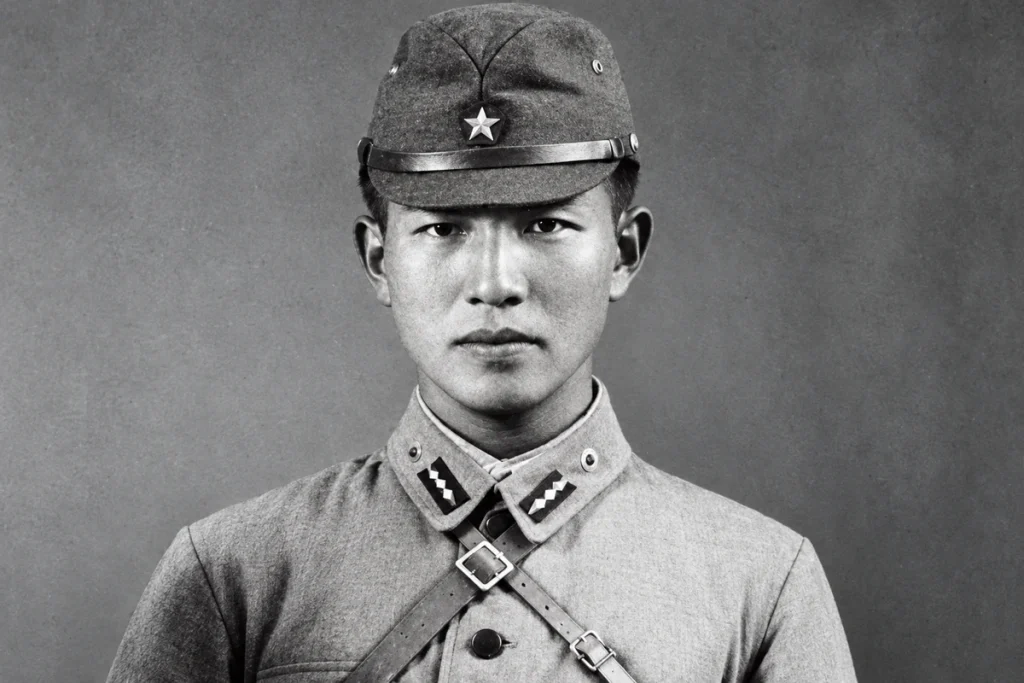
Imagine spending almost three decades in a state of war, when it had already finished before your body could comprehend it. This was the reality of Japanese soldier Hiroo Onoda, who spent almost 30 years in the forest of Lubang Island, Philippines.
But what makes this story even more interesting is the fact that the orders, mistrust, environmental conditions, and a mission that seemed to have lost its meaning created almost 30 years of persistent struggle for this person.
The Training That Made Him Doubt Everything
Hiroshi Onoda arrived at Lubang Island at the end of 1944 when the war was almost lost by Japan. He was a special infantryman, a soldier trained in guerrilla warfare and sabotage to defeat the enemy in the rear. According to the story of his life, his commander told him not to surrender or commit suicide but to continue the fight until his return.
When Japan surrendered in August 1945, Onoda and his three comrades found leaflets saying that they should stop the fight. Yet they could not accept this and thought they were deceived since they did not get such orders before. It seems that the military training that made them suspicious of the enemy made them unable to understand the situation.
Also Check | A Brave Baboon Who Fought in World War I
Their worldview was built on the image of an ever-present enemy who was trying to catch and kill them at any moment. It was not a surprise for Onoda that the war had ended.
The Strange World Outside His Jungle Hideout
The story contains a detail that may seem strange to the reader, namely, that Onoda was not entirely isolated from the outside world.
There were also many signs and documents indicating the war had ended, including leaflets, search parties, and radio messages. However, there are reports that he actually listened to the foreign radio in Japanese that talked about completely unrelated events.
It seems that even the presence of such information was not enough for Onoda to change his position. He believed it was all a trick to make him surrender.
The airplanes that sometimes appeared in the sky symbolized another problem. The Philippines had become a strategic crossroads of the global military conflict, including such events as the Korean and Vietnam Wars. Thus, these flights could have served as proof of the continuation of the war.
The most surprising aspect is that the information was there, yet it did not influence Onoda’s perception. In other words, knowing something and believing it are completely distinct concepts.
The People Who Paid for His Endless War
It can be said that Onoda was an excellent and loyal soldier who served his duties until the very end. However, the other side of the coin demonstrates that during his almost 30 years of survival in the forest, there were victims of the soldier and his philosophy.
While surviving, Onoda and his comrades stole food from villagers, such as coconuts, bananas, and rice. Moreover, the soldiers actively used weapons and engaged in shootouts with both inhabitants and authorities. According to historical records, about 30 local people died due to the actions of these soldiers. However, each case must be considered with all the evidence of guilt in mind.
Thus, people living on Lubang Island did not have a life of quiet peace before the soldiers’ group departed. Armed men continued to be in their lives for many decades after Japan’s surrender.
Perhaps this aspect is even more important for understanding the narrative about Onoda. The dedication of the soldier, who continued to live his duty, is impressive, but it caused inconvenience and suffering to real people.
Why One Man Finally Succeeded
In October 1972, Onoda lost his last companion, Kinshichi Kozuka, who was killed during the fight with the police. Then, in February 1974, a young Japanese adventurer named Norio Suzuoki, found the soldier in the forest of Lubang Island.
Suzuoki wanted to find Onoda to persuade him to return home. However, it was not that easy, since the survivor told the youth that he could not leave his post unless he receives orders from his commander.
Suzuoki returned to Japan, and then government officials took care of locating Onoda’s former commanding officer, Yoshimi Taniguchi. In March 1974, Taniguchi appeared at the place of the event and ordered Onoda to return.
After years of hardship, Onoda finally received his first order in decades. Of course, it was not a direct order from his commander, but the one that he had waited for 29 years and was decisive enough.
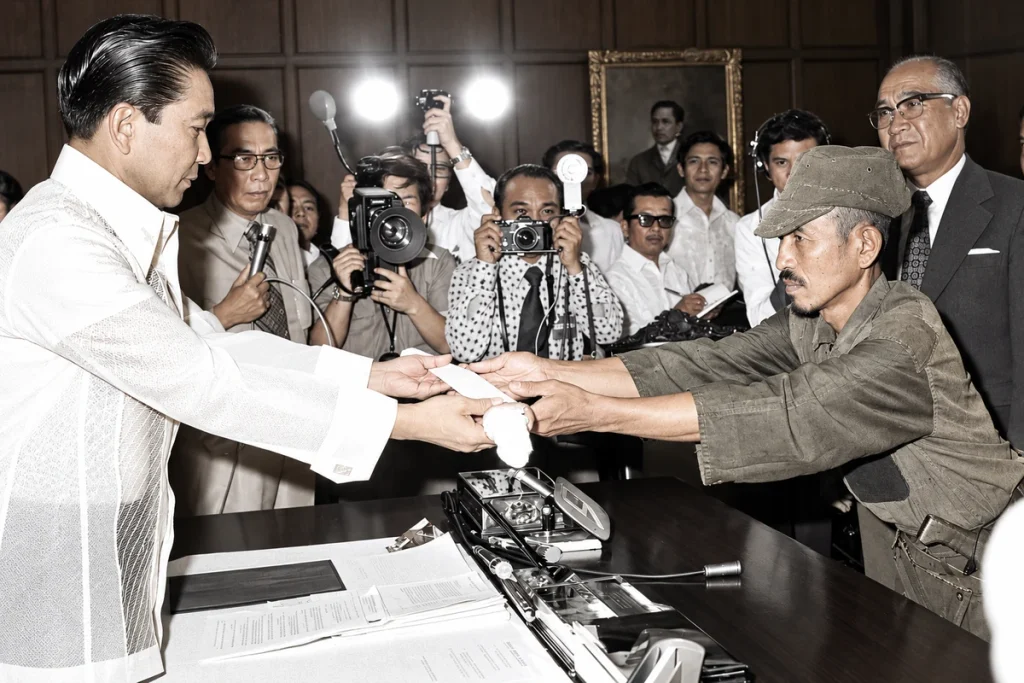
Onoda surrendered his arms to the president of the Philippines and returned to Japan, where he could finally start a new life after nearly three decades of living in the forest.
The Hardest Part Was Returning Home
The soldier’s incredible journey through the forest is quite inspiring, as it shows that loyalty and devotion to a cause can be incredibly powerful. However, it turns out that after almost three decades of struggle, the greatest challenge for Onoda was adjusting to everyday life.
The man could hardly believe that the war was over when he returned to Japan. Fortunately, he could soon move on to a new stage of his life and even move to Brazil, where he became a cattle rancher. Then he returned to Japan and got involved in the educational sector.
Also Check | The Man Who Sat on a Flagpole for 49 Days
His story teaches us that life is unpredictable, and we must not regret what has occurred. At the same time, it made me think about the importance of the superior order. Hiroshi Onoda is an example of how someone can remain deeply committed to a task that has lost its significance.
It was the order that dictated the soldier’s actions for so long, but in the end, it was enough to wait for the signal from the commander to take action.

A passionate blogger, content writer, and digital explorer, specialize in writing engaging, and value-driven articles across diverse niches.