
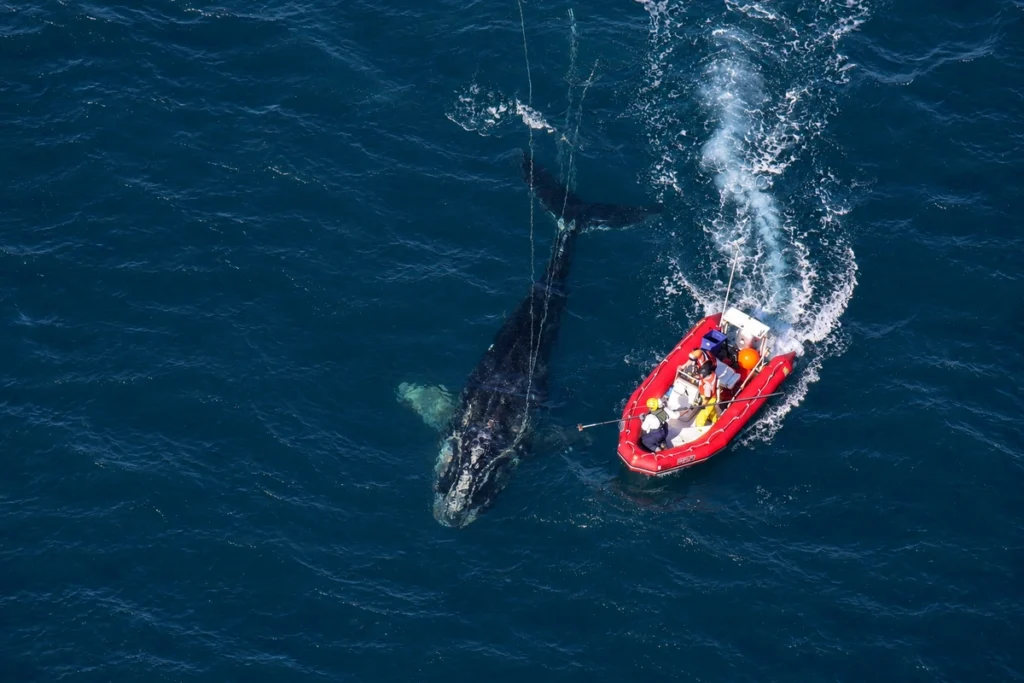
Rescuing whale is not an easy task. It needs courage, risk, and quiet dedication to saving some of the largest animals on Earth.
In July 2017, Canadian whale rescuer Joseph Howlett (Joe Howlett) climbed onto a fast response boat in the Gulf of St. Lawrence. He was on a rescue mission to help a North Atlantic right whale which was trapped in fishing gear.
Getting close to a stressed whale would be dangerous for most of people. But for Howlett, it was his daily work. He had spent years helping whales that were wrapped in ropes, lines, and heavy fishing gear. He knew the danger. He also knew what could happen if no one tried.
That day, he helped cut the ropes from the whale. The rescue worked. The animal was free.
Then, in this heartbreaking moment, the whale’s powerful tail swung, and it moved away. Howlett got struck and died. His final act wasn’t like carelessness at all. It was an act of compassion carried out in one of the most dangerous rescue jobs out in the natural world.
Whale Rescue Death And The Man Behind The Story
Joseph Howlett was not a star conservationist. He was a fisherman, a boat captain, and a volunteer from Campobello Island in New Brunswick, Canada. People who knew him said he was very calm, capable, and genuinely committed to the task.
He worked with the Campobello Whale Rescue Team, a group trained to respond when large whales end up trapped in fishing gear. By the time of the fatal incident, the official records said his experience at around fifteen years in whale disentanglement work.
That sort of experience matters because rescuing a whale is not the same as cutting a rope from a fence. A whale is huge, frightened, exhausted, and unpredictable. Even when rescuers are handling everything carefully, the animal doesn’t understand their intention.
One wrong, or just sudden movement can be fatal.
Still, rescuers like Howlett choose to help, because the other option is often worse. A tangled whale can drag ropes for weeks, months, or even longer. Those lines can cut into its skin, stop its movement, drain its strength, and make it harder to feed, move between places, or even breathe.
And for a species that are already under threat, every single rescue matters.
Also Check | Spaggiari: One of the Most Daring Heist in France History
Why Fishing Gear Is So Dangerous For Whales
Fishing gear entanglement is one of the most serious threats facing North Atlantic right whales. These whales often move through busy fishing areas where ropes, traps, buoys and lines are hanging around in the water.
When a whale goes through that kind of mess the rope can wrap around its mouth, flippers, body, or tail. At first it might look like the animal can still swim. But usually the real damage gets worse as time goes on.
As the whale keeps moving the rope tightens. It cuts in deeper and deeper. It makes injuries that can turn into infections. Then it basically drains the whale, it has to spend extra energy just to get through the ocean. In some cases the whale may slowly lose strength until it dies.
This is why whale rescue work is so emotional. Rescuers are not merely trying to get an animal out of a short term inconvenience. They are trying to stop a slow and painful death.
North Atlantic right whales are especially at risk because their population is very small. NOAA Fisheries has reported that more than eighty five percent of these whales have been entangled in fishing gear at least once. That figure says how widespread and serious this problem has become.
The Danger Rescuers Face At Sea
To free a whale, rescue teams must get close enough to study the ropes and decide where to cut. They may use long poles with blades, special hooks, tracking buoys, and boats that can move carefully beside the animal.
It sounds simple from a distance. But in reality, it is physically and mentally challenging task.
The ocean moves, the boat moves, the whale moves too. The ropes might be tight, hidden, or wrapped in ways that are hard to notice. A tired whale can suddenly dive, twist, smack its tail, or speed away.
That is why trained teams stick to strict safety rules. Ordinary people should not try to free a whale by themselves. Even a person with very good intentions can get hurt fast, worsen the whole situation, or put the whale into even higher risk.
Howlett’s death reminded the world that experts still face real danger during these rescues. After the tragedy, officials reviewed their safety procedures, and paused some response work, so they could figure out what happened and how future teams might be better protected.
Why Joseph Howlett’s Final Rescue Still Matters
The most painful part of this story is that the rescue itself succeeded. The whale was freed. The ropes were cut. The animal had another chance to survive.
But the man who helped make that possible did not return home.
That is why this whale rescue death continues to stay in people’s minds. It shows the emotional weight behind wildlife rescue. It is not always a clean, happy moment where the animal swims away and everyone cheers. Sometimes, saving a life comes with a cost that feels almost impossible to accept.
Howlett also reminds us that conservation is not only about rules, research papers, or ocean maps. It is also about real people who step into the dangerous situations because they believe another living creature is worth saving.
His work helped many whales before that final day. Each rescue gave an animal a chance to keep swimming, feeding, migrating, and living in the wild where it belongs.
Also Check | Weird Things That Only Found in Japan
A Tragic Reminder From The Ocean
Today, whale entanglement is still a serious issue. Conservation groups, scientists, fishermen, and governments keep looking for safer fishing approaches, better reporting systems, and gear that lowers the chance of whales getting trapped.
The goal sounds simple but it isn’t exactly easy. People need to fish, and whales need safe ways through the ocean. Reaching that balance is one of the biggest challenges in marine conservation.
Joseph Howlett’s story does not end with the moment he died. It continues every time rescue teams head out to help another trapped whale. It continues in every conversation about safer fishing gear. It continues whenever someone learns that a rope in the sea can become a life or death problem for a whale.
His final act was full of risk, but it was also full of heart.
He saw a suffering animal, and chose to help. That decision cost him his life, but it also left behind a strong reminder. Compassion is not always easy, even from a distance. Sometimes it is more like stepping right up to danger because another life is right there in front of you, struggling.