
Ancient cravings explained through the shocking reality of human survival
Prehistoric human diet wasn’t really like those clean eating trends calorie counters, or the neatly packed meals we see today. You open a fridge and it’s all chilled drinks, yogurt cups, leftover takeout, and fruit. But if you step back into deep human history, the “menu” gets a lot weirder, more severe, and honestly kind of revealing in a way you don’t expect.
For decades, scientists studying ancient bones, cave traces, and archaeological sites have been assembling a more detailed picture of what early humans actually ate. And it’s not just some simple caveman steak daydream. It is a story of scavenging, opportunism, smart survival, and those basic instincts that still nudge our food habits right now. Even Wonderwerk Cave in South Africa, has evidence pointing to human ancestors using fire roughly one million years ago , which shifted how researchers interpret cooking and human evolution.
Prehistoric human diet began with leftovers, not heroic hunting
Popular culture worships those fearless hunters who charge after enormous animals with spears, no question about it. But real life seems way less glamorous in the earliest chapters of human evolution.
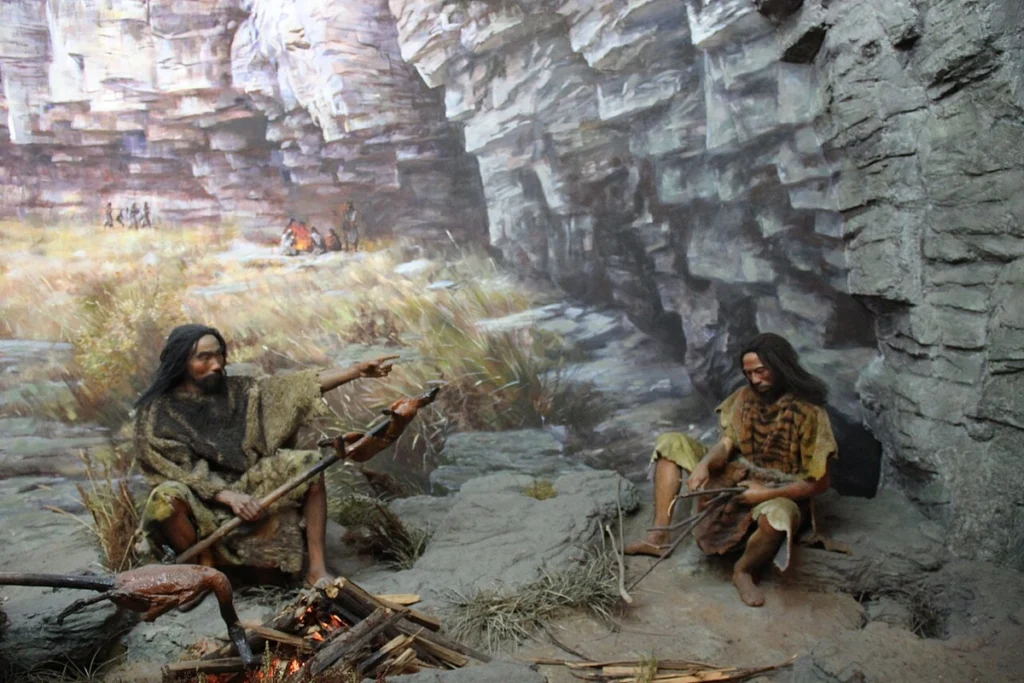
Our early ancestors probably survived on animal remains abandoned by more dominant predators. Lions and other meat hunters would take the best muscle portions first. Other scavengers cleaned away much of what remained. What early humans often found were thick bones still packed with calorie-rich marrow.
This mattered enormously.
Bone marrow was a nutritional goldmine. It had dense fat and a lot of energy that could help keep life going in places where food was unpredictable. Early stone tools made it possible for human ancestors to crack open those bones in a way other scavengers couldn’t easily manage. That simple act might have given a major survival advantage.
Brains were another valuable source of fat. In a world where calories were hard won, nothing nutrient rich went ignored.
Fire changed everything about how humans ate
One of the most important turning points in human history may have happened when fire entered the kitchen.
Evidence from Wonderwerk Cave strongly point towards controlled fire being used a lot earlier than people once thought. Cooking changed food in ways that transformed the human body. Heat softens tough plant fibres and makes calories easier to absorb.
Many researchers believe cooking helped support the energy demands of larger brains. The human brain consumes a remarkable share of the body’s energy compared with other organs. Easier digestion may have allowed more energy to be redirected toward brain development.
Also Check | How archaeologists found King Richard III skeleton
Insects were not survival food, they were normal food
Modern reactions to insects usually include disgust, but prehistoric humans may have seen them in a different way. Grubs, termites, beetle larvae, and other small insect forms were easy protein sources, together with body fat, and with less danger than hunting big predators. Even today, insects are still seen in familiar meals across many regions of the world.
From an evolutionary angle, munching insects made pretty good sense, because it fits naturally. They were everywhere and easier to catch, plus they were full of nutrients.
What looks strange today might have once been completely routine.
Honey may explain your sugar cravings
One of the more interesting clues about human appetite comes from honey.
Modern hunter gatherer groups, like the Hadza in Tanzania, have shown researchers how prized honey can be in food-collecting societies. Honey provides quick energy in a dense form that would have been seriously useful in ancient environments where calories were never really certain.
That helps explain something familiar.
Why sugary foods feel so irresistible?
In ancient life, finding sweetness was a survival win. In modern life, that same biological wiring meets ultra processed foods engineered to trigger the same reward systems.
Your craving for dessert is not random. It has deep evolutionary roots.
Meat became more than food
As humans became more experienced at hunting and tool making, their menu also expanded surprisingly.
Archaeological evidence indicates that people ate wide range of animals based on the geography and the environment around them. Fish, wild predator meat, birds, eggs, nuts, seeds, fruits, roots, and seasonal plants probably all had some part in their diet.
Large animals offered major advantages. A successful hunt can provide more calories than gathering plant foods. With more food around, people probably had extra time for social bonding, childcare, improving tools, telling stories, and just generally being more coordinated.
Food did not just fuel the body. It helped shape culture.
Also Check | Da Vinci’s self supporting bridge design reveals brilliant ancient engineering secret
The disturbing evidence from ancient caves
One of the most unsettling parts of prehistoric food research comes from evidence of cannibalism.
At Gough’s Cave in England, researchers uncovered human remains that date back around 14,700 years with clear signs of butchering, marrow extraction, and skull modification. Some of the skulls seem to have been formed into cup-like forms. There are also extra engraved markings that could have carried ritual significance rather than hunger.
This is an uncomfortable reality, but archaeology shows human behaviour has always been complex.
Not every ancient action was caused purely by starvation. Rituals, beliefs, disputes, and traditions may affect these behaviours.
Rotten food may have had a purpose
Another surprising possibility is the eating of aged or fermented animal foods, not just plants.
Before refrigeration, keeping food safe took some real imagination. Things like drying, burying, cooling in water, or letting food naturally transform were all practical approaches. Then, controlled fermentation started showing up across cultures.
Microbial work changes the texture, flavour, and digestibility of food. Even though old preservation methods were very different from place to place, the basic human willingness to eat transformed food is hardly new.
Why ancient instincts still control modern eating
The most interesting takeaway from human food history is not what ancient people ate.
It is what their diet did to us.
Humans evolved in environments where food scarcity was normal. Calories were uncertain. Fat and sugar were precious. Salt mattered. Protein signaled survival.
Our biology still responds as if scarcity might return tomorrow.
That creates a strange mismatch in modern life.
Supermarkets are always there with high-calorie foods. Those packaged snacks are cheap, convenient and made for repeat consumption. But our internal systems were built for a completely different world.
That late night urge to grab something sweet is not simply weak willpower. It reflects ancient survival programming operating in a modern food landscape.
Also Check | Ethiopian Boy Goes Viral For Turning Trash Into Treasure
The real story of human food is adaptability
The biggest myth about ancient diets is that there was one perfect ancestral menu.
There was not.
Humans survived because they adapted. Arctic populations ate differently from tropical communities. Coastal groups differed from inland hunters. Food choices changed with season, climate, migration, and technology.
The true human superpower was flexibility.
That adaptability explains why humans spread across the planet and did well in totally different environments.
So if an ancient human walked into your kitchen today, they would probably be astonished by the abundance. But they might also instantly recognise something familiar.
The instinct to seek rich, energy-dense food.
Because underneath all this modern packaging, delivery apps, and refrigerators, some of our oldest survival techniques are still very much alive.

A passionate blogger, content writer, and digital explorer, specialize in writing engaging, and value-driven articles across diverse niches.