
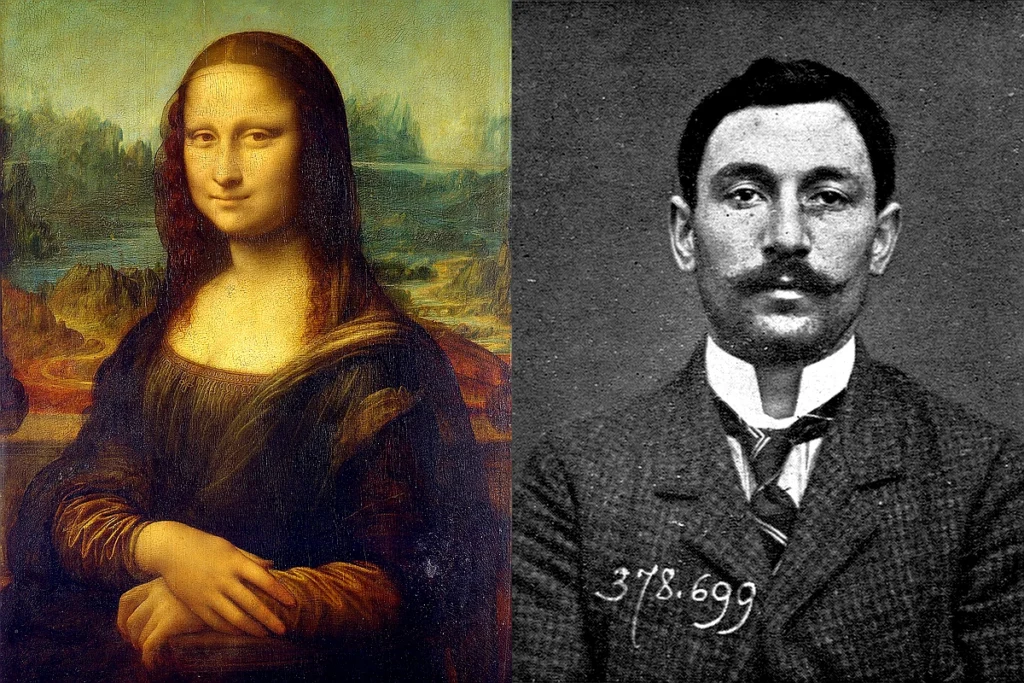
Mona Lisa theft sounds almost impossible today. A painting watched by crowds, glass, cameras and guards disappearing from the Louvre feels like a movie plot. But in 1911, Leonardo da Vinci’s portrait vanished because one ordinary worker looked like he belonged. Vincenzo Peruggia did not need a dramatic mask or secret tunnel. He used daily routine, trust and a worker’s smock.
Mona Lisa Theft Happened Because the Louvre Was Too Trusting
On a Monday morning in August, when the Louvre was closed to the public. A closed museum sounds almost safe, but somehow it was still full of a staff who were permitted inside as part of the daily routine.
Perugia was a glazier at the Louvre before. He dealt with protective glass, frames and all that stuff, so the place didn’t feel odd to him. He understood the way workers went in and out. He also figured that people in work clothes are often ignored.
Why a Worker’s Smock Was Better Than a Disguise
A thief in a strange coat might look suspicious. A worker in a white smock did not. That simple attire was more helpful than a clever disguise because it matched the place.
Peruggia seemed like someone doing a normal job. Frames need checking. Glass needs cleaning. Rooms need fixing. When someone looks like part of that movement, people stop asking questions.
Also Check | Nice Bank Heist: One of the Most Daring Crimes in France History
Why Monday Gave the Thief the Perfect Cover
Monday gave Peruggia some space. The galleries weren’t packed with visitors, yet the place also wasn’t empty. If the Louvre had been full of people everywhere, too many eyes would have probably spotted him. But if it had been empty, any move would have felt odd.
Instead, Monday created a middle ground. There were enough workers around to make the activity seem normal, but not enough visitors to make the gallery feel watched.
The Assumption That Delayed the Alarm
When staff first noticed that space, they did not immediately think of theft. They believe the painting had been moved for official museum work, photography, or inspection. But that simple assumption gave the thief a precious advantage.
Museums do move objects. Art pieces are taken off the wall for study, maintenance, and examination, too. So that blank spot at first just looked like normal procedure, not a crime.
The Stairwell Where the Crime Became Real
After taking the painting off the wall, Peruggia carried it toward a nearby service stairwell. In that little space, he then removed the painting from its heavy framing and protective glass.
This detail makes it clear why inside knowledge mattered. A random visitor might have struggled with the frame, glass, and exit route. Peruggia knew enough to separate the artwork from the bulky components that would have made carrying it difficult.
Once the portrait was free, it became small enough to hide under his clothing.
Also Check | Famous Foods That Were Invented by Accident
Why Nobody Immediately Suspected the Real Thief
Police did not instantly focus on Peruggia. Investigators questioned workers, checked theories and chased more dramatic suspects.
Famous names were pulled into the story. Poet Guillaume Apollinaire was arrested for questioning. Pablo Picasso also became part of the wider investigation because the stolen objects were linked to people around Apollinaire. The case began to look bigger and stranger than it really was.
The Blank Wall Became More Famous Than the Artwork
After the theft incident, the empty wall became a public attraction. People came to see the blank spot where the portrait had hung. Print media filled their pages with theories and rumours.
Before the theft, the painting was well known, but it had not gained global attention. The disappearance gave it a new fame.
Why the Mona Lisa Became a Global Icon After the Theft
Absence made the painting feel priceless. The Mona Lisa was no longer only a Renaissance portrait. It became the painting everyone was talking about.
When the art piece was finally found in Florence more than two years later, the story grew even bigger. Peruggia claimed he wanted to return the painting to Italy, though historians still debate on his main intention. Whatever he believed, the result was clear. The theft turned that famous artwork into a worldwide icon.
Also Check | Jackie: A Brave Baboon Who Fought in World War I
What This Theft Reveals About Museum Security
The story still matters because security is not only about locks and guards. It is also about assumptions. People trust uniforms. They trust routines. They trust familiar roles.
Modern museums now use stronger systems, from cameras to controlled access and alarms. But the old lesson remains simple. A place can be full of treasures and still be vulnerable if people stop noticing ordinary behavior.
Conclusion
The Mona Lisa wasn’t stolen by any genius criminal. It was taken by someone who understood the quiet power of daily work. Vincenzo Peruggia walked through a trusted space, looked like he belonged to it, and used the museum’s own habits against it.
That is why the 1911 theft still feels strange. The crime was not brilliant because it was complex. Because it was simple.

A passionate blogger, content writer, and digital explorer, specialize in writing engaging, and value-driven articles across diverse niches.
1 thought on “How a Louvre Worker Stole the Mona Lisa in 1911”