
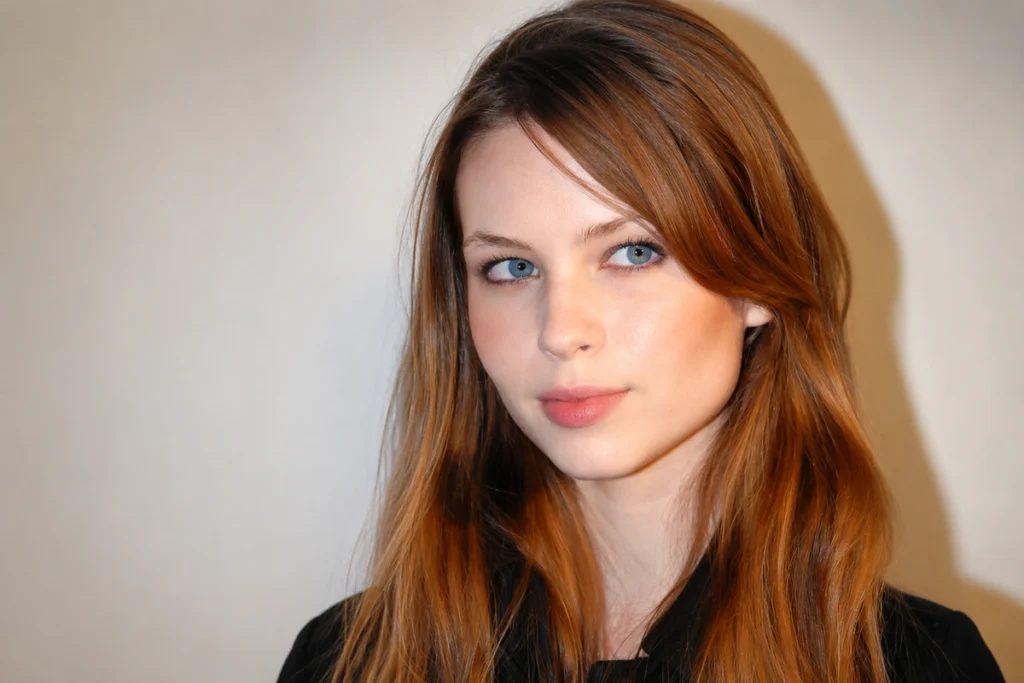
Daveigh Chase’s Rare Year of Contrasting Performances
Daveigh Chase died on June 16, 2026, at age 35, according to reports that published the following day. News of her death brought fresh attention towards a career that produced several memorable performances while she was still very young.
For many viewers, Chase will always be connected with the frightening image of Samara crawling from a television in The Ring. Yet that classic scene represents only one part of her unusual contribution to film.
During 2002, she was heard as Lilo in Disney’s Lilo & Stitch, voiced Chihiro in the English version of Spirited Away and appeared as Samara Morgan in The Ring.
These characters looked and acted very differently. Beneath those differences, however, they shared something important. Each was a child experiencing a powerful form of isolation.
Lilo: A Child Dealing With Loss and Loneliness
Lilo is introduced as a difficult and unusual child, but her behaviour makes more sense when viewed through her grief.
She has lost her parents and is being raised by her older sister, Nani, whose struggle to keep their family together creates tension between them. Lilo herself also finds it hard to fit in with other kids. She wants friendship, but her anger and unpredictable behaviour often ruins the moment.
Chase did not make Lilo sound like a polished animated heroine. Her voice could be loud, stubborn, playful and suddenly vulnerable. That emotional unevenness made the character believable.
Children dealing with grief do not always explain what they are feeling. Sometimes sadness appears as anger, strange behaviour or a desperate attachment to anyone who seems willing to stay.
This is why Lilo’s relationship with Stitch carries so much emotional weight. She does not just adopt a strange creature. She recognises another outsider who is unwanted and misunderstood.
Chase’s performance allowed the humour to remain funny without hiding the pain behind it. Lilo sounds like a child trying to create a family before the family she still has can be taken away.
Also Check | Weird Things That Only Found in Japan
Chihiro: Fear Gradually Becoming Courage
Chase also voiced Chihiro Ogino for the English dubbed version of Hayao Miyazaki’s Spirited Away.
She was not the original Japanese performer of the character. The original Chihiro was voiced by japanese artist Rumi Hiiragi, while Chase recorded the English dialogues for people watching the dubbed release.
That distinction matters, but so does the effort involved in carrying the character’s emotions into another language.
At the beginning, Chihiro is nervous, unhappy and dependent on her parents. When they are changed and she becomes trapped in a world filled with spirits, she has no familiar adult to guide her.
Chase’s English performance follows Chihiro’s gradual emotional transformation. Her early voice sounds uncertain and easily overwhelmed. As the story progresses, it becomes calmer and more determined.
The change is not sudden. Chihiro remains frightened, but she begins acting despite her fear. That is what makes her courage convincing.
Chase helped English viewers to understand that development, without turning Chihiro into a fearless adventurer. She remained an ordinary child placed in an extraordinary situation.
Samara: Horror Created Through Physical Performance
Samara Morgan required a completely different kind of acting.
Unlike Lilo and Chihiro, Samara does not express herself through long conversations or changing vocal emotions. Much of her terror comes from silence, posture, movement and the way she occupies a scene.
In The Ring, Chase used physical performance to make Samara feel unnatural without relying on constant action. Her stillness created discomfort. When she moved, the movements felt slow, controlled and strangely disconnected from normal human behaviour.
The contrast with her animated roles is striking.
Lilo reaches out because she wants someone to understand her. Chihiro learns to communicate and cooperate in order to survive. Samara seems to have moved beyond any ordinary desire for connection. Her isolation has become something threatening.
The performance is remembered for the television sequence, but its power begins much earlier. Chase helped create the feeling that Samara was not simply an angry child. She was a presence shaped by rejection, suffering and a complete separation from normal life.
Also Check | This Strange Frog Can Give Birth Through the Skin on Its Back
Three Children, Three Different Forms of Isolation
The strongest connection between these performances is not that they were played by the same young actor. It is that they present three very different pictures of childhood loneliness.
Lilo feels abandoned and misunderstood. Her parents are gone, her sister is under pressure and other children reject her. She responds by holding tightly to the idea of family.
Chihiro is separated from her parents in an unfamiliar world. She cannot depend on the life she knew, so she slowly develops the courage to move forward alone.
Samara is also an isolated child, but her story takes the idea in a darker direction. She is feared, rejected and eventually transformed into a source of fear herself.
Lilo’s loneliness leads her towards connection. Chihiro’s isolation leads her towards independence. Samara’s rejection leads towards horror.
Seen together, the roles reveal something more interesting than simple versatility. Chase portrayed three children standing outside the safety of an ordinary childhood, with each one responding to that separation in a completely different way.
The Awards That Demonstrated Her Range
Her work received recognition from two very different corners of the entertainment industry.
Chase won the Annie Award for voice acting in an animated feature for playing Lilo. The award recognised the warmth, humour and emotional honesty she brought to the character.
She also won Best Villain at the MTV Movie Awards for her performance as Samara in The Ring.
The two honours captured the unusual range of her work. One celebrated a voice performance that made audiences care for a lonely child. The other recognised a nearly silent horror performance that made audiences fear one.
Few young actors become closely associated with both a beloved family character and a major horror villain, especially within the same year.
Also Check | A Youtuber Defeated A Lock Company by Exposing Its Security Flaw
Her Career Beyond 2002
Her career did not begin or end with those three characters.
Before her breakthrough year, Chase appeared as Samantha Darko, the younger sister of the title character in the 2001 film Donnie Darko. She later returned to the role in S. Darko.
She also continued voicing Lilo in projects connected with the Disney franchise, including Stitch! The Movie, Lilo & Stitch: The Series and Leroy & Stitch.
On television, she took on a more complex dramatic role as Rhonda Volmer in HBO’s Big Love. Rhonda was a manipulative teenage girl raised within the isolated community of Juniper Creek. The character once again allowed Chase to explore a young person shaped by an unusual and restrictive environment.
Her later screen credits included films such as Little Red Wagon, Wild in Blue, American Romance and Jack Goes Home.
A Legacy Larger Than One Frightening Image
Samara remains one of the most recognisable figures in horror movies of the early 2000s, and that image will probably always be part of how audiences remember Chase.
Her legacy is much larger than a pale face hidden behind long dark hair.
Children continue to discover Lilo as a girl searching for family and acceptance. New audiences meet Chihiro whenever they watch the English version of Spirited Away. Horror fans continue to encounter Samara through a film that became part of modern popular culture.
These performances reach different generations because they speak to different emotions. One offers warmth, another shows growing courage and the third gives childhood fear a disturbing form.
Together, they preserve the remarkable range Daveigh Chase displayed at an age when most performers are only beginning to discover what they can do.