
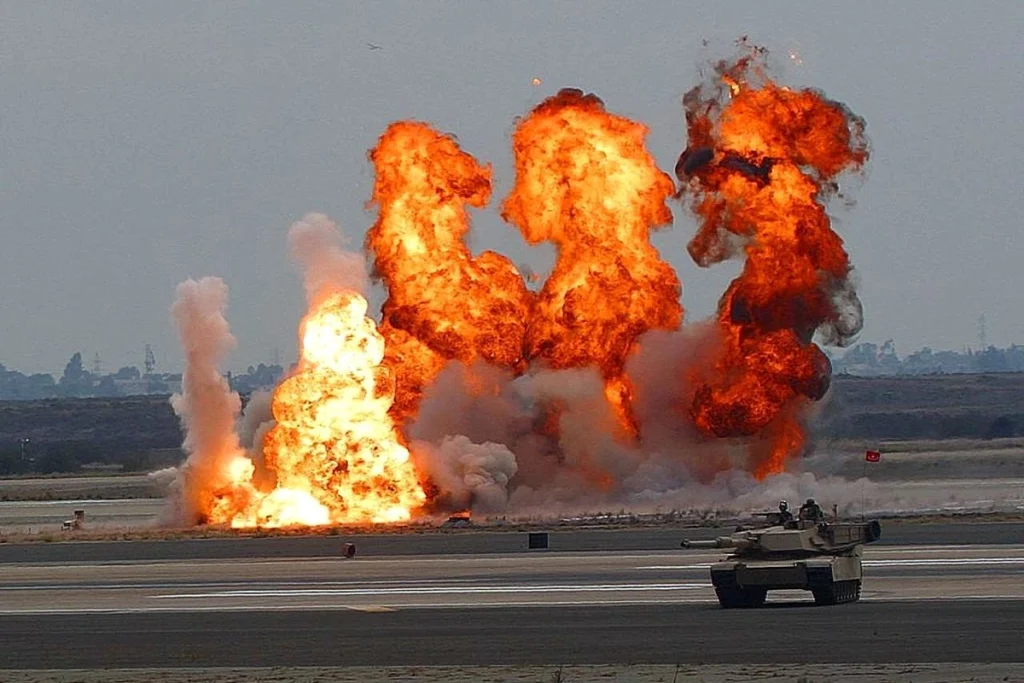
In a lot of action war films, the blast scenes look painfully real. Fire and smoke fill the frame, and you almost expect to feel the heat. A few people even think the blasts are actually real. But they are not.
In today’s movies, explosions can look real. They often happen without any real blast on set. But did you know how these fake explosion effects are created? To create these types of explosions, very simple techniques were used with the help of airborne dirt, compressed air and carefully timed lighting to create the visual language of a blast.
Instead of creating a dangerous fireball, crews can make the camera believe one happened. The technique is not about making a huge explosion, but about combining several small visual details at exactly the right moment.
The dirt creates the illusion of impact
A small amount of non-heavy material can suddenly spread through the frame, which creates a chaotic scenario that audiences associate with an explosion. Professional production houses mostly use controlled effects equipment and carefully selected materials rather than just throwing ordinary debris around.
Also Check | How a Microwave Heats Water Without a Flame
Air cannons and similar pneumatic systems are already used in many films and theatre to show simulated debris.
The flash sells the explosion
The bright flash is another important part of the illusion. When a burst of light is synchronised with the debris movement, the audience’s mind naturally feels the two events.
This is a very effective method because real explosions are often recognised through several cues at once: a sudden change in light, rapidly moving material, smoke or dust, and a strong sound.
The camera does part of the work
The fake explosion effect also depends on perspective. When debris moves toward the camera lens, even a relatively small practical effect can appear much larger.
For many decades, filmmakers have used compressed-air systems to create dust and debris effects in their movies. Research on film effects, for example, includes the use of air cannons to place dust and debris into shots involving large-scale destruction.
Sound completes the illusion
The explosions without sound are only half the trick. The final explosion usually becomes much more convincing after adding sound effects.
A deep blast, debris effect and a rumble can turn a simple cloud of material into something much more powerful that happened off-camera.
Also Check | The Incredible Man Who Cheated Death Seven Times
Why practical effects still matter
Visual effects can create almost anything, but practical debris gives the camera something real to capture. That can produce natural motion, lighting and interaction which are not possible to reproduce perfectly in computer-generated imagery.
A few leading studios use air pressure devices, along with timed bursts and carefully handled fireworks effects.
Conclusion
The next time you are watching a film and you see a blast, it may not be a giant ball of flame at all. A professional team use small pieces of debris material that break away in a planned burst. They add a bright flash at the right moment to make it look more realistic. The camera perspective and sound work also play a very important role.
That is what makes fake explosions look so fascinating: sometimes the most convincing explosion begins with something much smaller than the audience expects.

A passionate blogger, content writer, and digital explorer, specialize in writing engaging, and value-driven articles across diverse niches.