
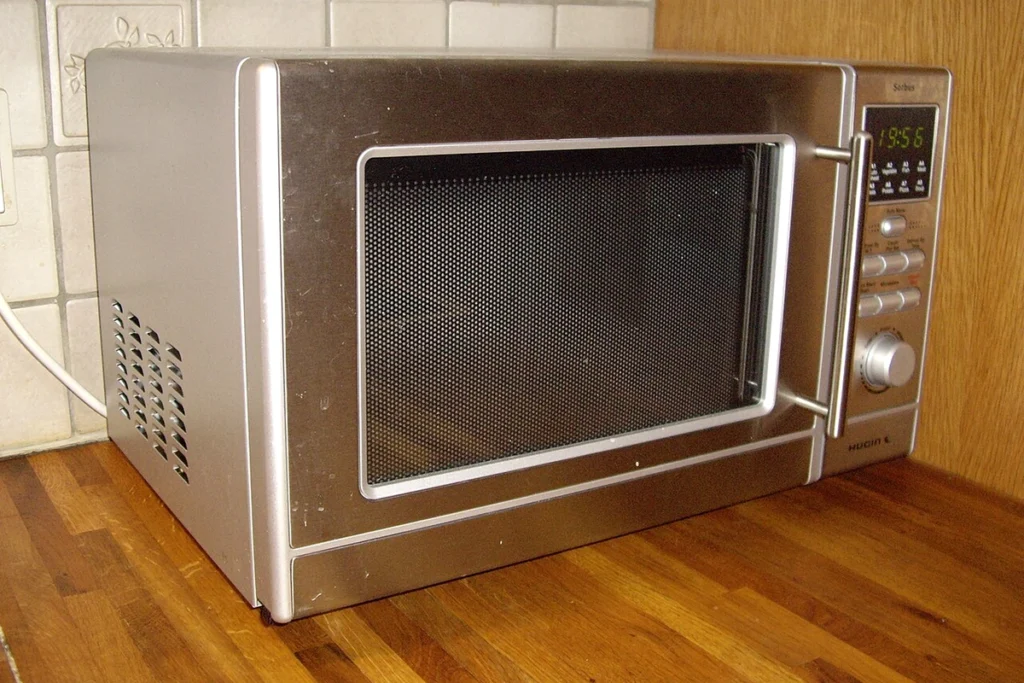
How a microwave heats water is a very surprising and curious question, because there’s no flame, no hot plate, and also no heating coil directly touching the water.
The real thing is electromagnetic energy. In a microwave oven, there is a component called a magnetron which makes microwaves and they bounce around inside the metal cavity until absorbed by the food. Water is especially central, since its molecules respond to the rapidly flipping electric field.
But honestly, there’s a bit more happening than just making the water molecules shake.
Why Shaking Water Creates Heat
Imagine you walking through a crowded room when suddenly everyone turns at once. You’d spend effort adjusting, again and again, right?
Water molecules can act in a similar way when they are in a fast changing electric field. Since water molecules are polar, like the positive and negative sides aren’t balanced the same, each side reacts differently to that field.
Also Check | Leonardo da Vinci’s Self Supporting Bridge Design
Since the electric field keeps changing direction, the molecules are forced to keep reorienting. That reorientation doesn’t go smoothly or perfectly; some of the motion lags, and energy from the electromagnetic field gets dissipated inside the material. Eventually that energy shows up as heat, and this whole approach is called dielectric heating.
Why the Frequency Really Matters
Now this is where the microwave gets clever, and it’s not random.
A normal microwave oven operates around 2.45 GHz. In which the electric field moves billions of times each second. With that rhythm, polar molecules didn’t get much time to react before the field reverses again.
So the energy transfer is efficient; the electromagnetic energy converts into thermal energy quite well.
And yeah, that’s why the phrase microwave “shakes water” can be a handy analogy, but it’s not the full science.
The Magnetron Does the Heavy Lifting
The oven does not create heat first. Instead, a magnetron starts making microwave energy. The oven’s metal walls reflect it in a sort of bouncing pattern, so the energy can go into the food from different places at once. Water and a few other microwave-absorbing parts then take in some of that electromagnetic energy, and in the end it shows up as heat.
What’s also interesting is that microwave ovens were not invented as some instant kitchen shortcut. Apparently, engineer Percy Spencer discovered the microwave heating effect while working on magnetrons, the devices used in radar technology. Reportedly, a candy bar in his pocket melted when it got a bit too close to an operating magnetron. After that, he got curious and started investigating more.
Also Check | The Science Behind Nature’s Rare Double Yolk Egg
Why Microwaved Water Can Become Dangerously Hot
There is also this odd type of behavior. Water warmed by itself, in a calm, smooth container, can sometimes become superheated. That means it can sit above its normal boiling point, without giving the usual visual sign, like bubbles.
Then a quick disturbance can flip the switch, and the boiling process works faster. After that, the overheated liquid may suddenly surge up.
Conclusion
So basically, a microwave creates heat by using an invisible electromagnetic energy.
Rather than using a flame, it transmits rapidly varying electromagnetic energy straight into the food. Those water molecules respond to that moving field, and the absorbed energy from the material ends up becoming heat.
And that simple idea was first noticed in radar-related research and got turned into one of the most common appliances in modern kitchens.

A passionate blogger, content writer, and digital explorer, specialize in writing engaging, and value-driven articles across diverse niches.