
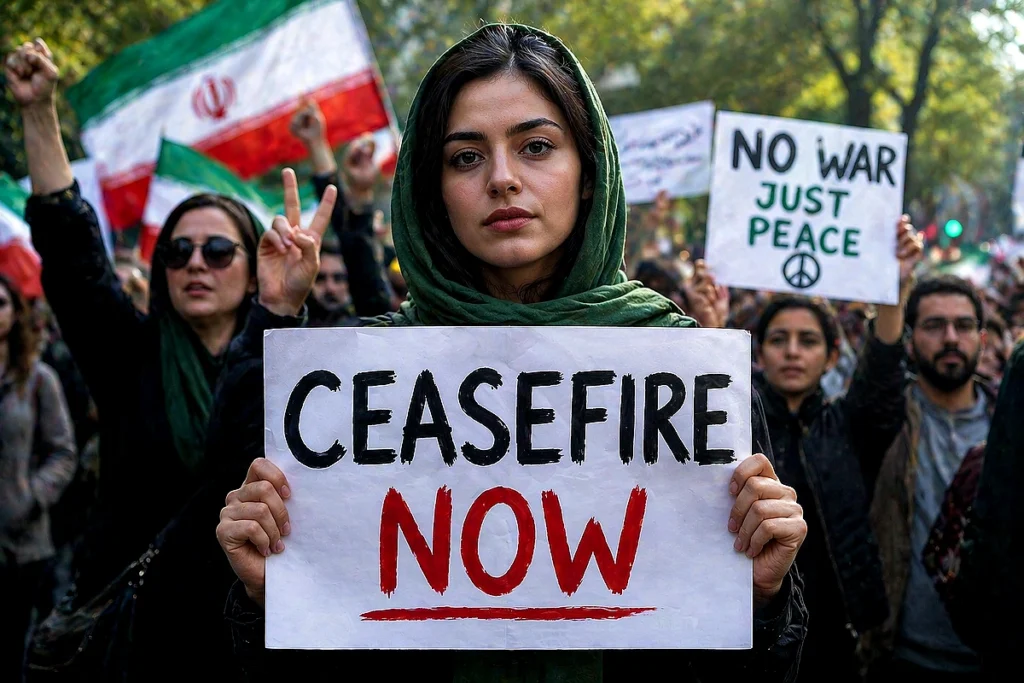
US Iran ceasefire extension has given the world a brief moment to breathe, but if you look closely, the situation still feels like a storm waiting to break. The announcement came at a critical time when the earlier two week ceasefire was about to expire. For many observers, it felt like watching a ticking clock that could trigger something much bigger.
At the last minute, the United States decided to extend the US Iran ceasefire indefinitely. This move, reportedly influenced by diplomatic outreach from Pakistan, has delayed immediate military escalation. Yet, beneath the surface, nothing seems truly settled.
Why the US Iran Ceasefire Matters Right Now
The timing of this decision says a lot. With just a day left before the ceasefire deadline, tensions were quietly building again. Military analysts were already speculating about possible confrontations, especially in sensitive zones linked to trade routes and naval activity.
Instead, the extension has created a pause. Not peace, but a pause.
This distinction matters. A ceasefire is not a resolution. It is simply a temporary agreement to hold back. In this case, both sides appear to be stepping carefully, almost as if they are buying time rather than solving anything.
The United States has made it clear that while it is holding off on military action, it is not easing pressure. Economic and strategic restrictions remain firmly in place, which continues to frustrate Iran.
Talks Collapse Before They Even Begin
There was supposed to be a second round of peace talks, and interestingly, Pakistan had stepped forward to host them. For a moment, it looked like diplomacy might take center stage again.
Then everything changed.
Iran decided not to participate at the last moment. That single decision disrupted the entire plan and even led to the cancellation of a high level US visit. It was one of those moments where you realize how fragile diplomacy can be.
When talks collapse like this, it does more than delay solutions. It increases mistrust. Both sides start questioning each other’s intentions even more.
The Hidden Tension Behind the Ceasefire
While the US Iran ceasefire extension has grabbed headlines, the real tension lies elsewhere. The ongoing restrictions and strategic blockades are still in place, and they continue to be a major source of conflict.
For Iran, these restrictions are not just political. They hit the economy directly. Key trade routes remain under pressure, and that affects daily revenue and long term stability.
From the US perspective, these measures are part of a broader strategy. The idea is to maintain leverage without triggering open conflict. It is a delicate balance, and one wrong move could tip everything.
Pakistan Steps Into the Spotlight
Pakistan’s role in this situation is worth paying attention to. Acting as a mediator is never easy, especially when dealing with two countries that have deep rooted disagreements.
Prime Minister Shehbaz Sharif welcomed the ceasefire extension and framed it as a positive step toward dialogue. There is hope in Islamabad that talks can eventually resume and lead to something more concrete.
But mediation only works when both sides are willing to engage. Right now, that willingness seems uneven.
Still, Pakistan’s involvement shows that regional players are actively trying to prevent a larger crisis. It is a reminder that global conflicts are rarely isolated. They ripple outward, affecting many nations at once.
Iran’s Silence Speaks Volumes
One of the most striking aspects of this situation is Iran’s response, or rather the lack of it.
There has been no clear official reaction to the US Iran ceasefire extension. Instead, statements from military officials have hinted at readiness rather than reconciliation. Warnings about potential retaliation have added another layer of uncertainty.
When a country chooses silence over dialogue, it often signals hesitation or strategic calculation. It could mean Iran is reassessing its options. Or it could mean it is preparing for a different approach altogether.
Either way, the absence of a direct response leaves a gap filled with speculation.
A Fragile Pause, Not a Lasting Solution
If you step back and look at the bigger picture, the US Iran ceasefire extension feels more like a temporary shield than a permanent fix.
On one side, military action has been paused. On the other, core issues remain unresolved. There is no agreement, no roadmap, and no clear timeline for talks to resume.
This creates a strange kind of stability. Everything looks calm on the surface, but the underlying tension has not gone away.
It is similar to holding a stretched rubber band. As long as you keep holding it, nothing happens. But the moment you let go, the snap can be sudden and sharp.
What Could Happen Next
The next phase depends on a few key factors. Will Iran return to the negotiating table. Will the United States adjust its stance. And can mediators like Pakistan bring both sides back into the same room.
These questions do not have easy answers.
If dialogue resumes, there is a chance for gradual progress. Confidence building steps could reduce tension over time. But if talks remain stalled, the risk of escalation will continue to linger.
For now, the world is watching closely. Every statement, every move, and even every silence is being analyzed.
Final Thoughts
The US Iran ceasefire extension has prevented an immediate crisis, and that in itself is significant. But it is not a solution. It is a delay.
The real challenge lies ahead. Turning this pause into a path toward peace will require trust, compromise, and consistent dialogue. Without those, the current calm may not last long.
And in global politics, temporary calm often hides deeper storms.